
The unique cluster and ecosystem of natural resources and bioeconomy expertise in Kanta-Häme supports the green development and implements EU´s Green Deal in the region. Rural vitality, local food production, sustainable nature tourism, robotics, robotics in education, equine industry ecosystems, metal industries and circular economy together with digitalisation are in the centre of regional development. Kanta-Häme regions want to be actively involved in creating and building RDI- networks nationally as well as internationally and across traditional sector boundaries. Through international and EU collaboration, we help all actors in our RDI- an ecosystem to generate new innovations and businesses and new partnerships. Häme EU Office is a liaison contact for all actors in the innovation ecosystem of Kanta-Häme region.
Contact detail
-
Head of office
-
Contact person
-
Brussels Office Address
Square de Meeus 1
1000 Brussels
Belgium

S3 Strategy
KANTA-HÄME RIS3 – Strategy for research, innovation and smart specialisation. Kanta-Häme Region´s (FI) RIS3 Strategy targets political support and investments into the region´s central priorities by utilizing region’s strengths, competitive advantage, and excellence potential. Important elements are research-based technological and practice-based innovations. Kanta-Häme RIS3 aims to promote private sector investments and cooperation between various stakeholder groups in quadruple-helix-cooperation. Kanta-Häme RIS3 priorities are: Sustainable use of natural resources, Bioeconomy and circular economy Industry 4.0 Creative industries, tourism, and well-being services, Built environment and services
Kanta-Häme Region´s central logistical location in Southern Finland creates good preconditions for built-environment businesses and services. Special themes include sustainability, ecological construction, and landscaping combined with new sustainable energies and steel construction. Opportunities brought by digitalization both in urban and rural areas create new service possibilities. New types of living and intelligent transport solutions also have international demand. It is important to respond quickly to possible new needs in emerging industries. Promotion of new business activities, enterprises, products, and services (EDP) is vital. User-driven development requires trust as well as genuine, open, and appreciative cooperation. It is imperative to strengthen already strong emerging industries, increase entrepreneurship, and facilitate international competitiveness.
Strategic R&I Projects
Latest Tweets
Latest Tweets
Latest Updates

- By Ewa Chomicz
Regions stepping up on resilience, security & defence
On 24 February, ERRIN members gathered during the Policy Working Group meeting to reflect on a question that is rapidly moving up the European agenda: What is the role of regions in strengthening Europe’s resilience, security and defence? Find out what we talked about with speakers from the European Commission and regional representatives in the article.

- By Astrid Hannes
Four years on: Celebrating Circular Cities and Regions Pilots’ achievements in driving circular change across Europe
Local and regional authorities across Europe are increasingly committed to the circular economy, yet many still ask the same question: what does implementation look like in practice? A new publication of the Circular Cities and Regions Initiative (CCRI) presents circular systemic solutions which were implemented by twelve Circular Pilot Cities and Regions from 2022-2025. Providing concrete answers and pathways for replication, the pilot solutions span different territorial contexts – from small municipalities to large regions – and cover a wide range of value chains, including construction and the built environment, circular resource management, bioeconomy and nutrient recovery, consumer goods, packaging and food systems.

- By Astrid Hannes
New report: Circular Cities and Regions Pilot Solutions: Insights, impacts, and replication paths
From 2023 until 2025, the Circular Cities and Regions Initiative has supported 12 European cities and regions to test what it really takes to turn circular economy ambition into practical, local and systemic solutions. Their examples in developing Circular Systemic Solutions (CSS) across various sectors and focus priorities form the foundation of this booklet. This compilation brings together the insights and solutions developed through the CCRI Pilot programme between January 2023 and October 2025. It highlights not only what the Pilots achieved, but how they did it: the partnerships they built, the barriers they faced, the tools they used and developed and the lessons that can help others accelerate their own transitions.

- By Astrid Hannes
Get inspired by success stories of the Circular Cities and Regions Initiative
During an online webinar on 11 December, 12 success stories of regions and cities that piloted circular systemic solutions in their territories with support of the Circular Cities and Regions initiatives were presented. We encourage ERRIN members to check the recordings of this webinar, as the lessons learned and experiences shared can inspire other local and regional authorities to launch new local and regional circular initiatives across Europe.
- By Anonymous
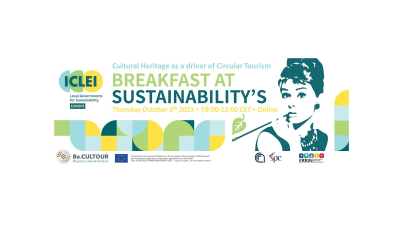
ERRIN members showcase good practices at ICLEI B@S event on circular cultural tourism
The last edition of ICLEI’s flagship Breakfast at Sustainability’s series took place on 5 October 2023 from 10:00-12:00 CEST , in collaboration with ERRIN and as part of the Be.CULTOUR project. On this occasion, ERRIN members had the opportunity to take the stand and showcase inspiring examples of good practices demonstrating how circular approaches to tourism, human-centred destinations, and heritage-led transformations can contribute to building a sustainable future for all.

- By Astrid Hannes
Multi-Stakeholder Dialogue: CCRI Policy recommendations in view of the Circular Economy Act
On 12 February 2026, the Circular Cities and Regions Initiative (CCRI), is organising an hybrid multi-stakeholder dialogue in view of collecting inputs for the Circular Economy Act which is expected to be published in the third quarter of 2026. During this dialogue, cities and regions will have the unique opportunity to provide their feedback on the policy recommendations the CCRI is proposing for supporting the circular transition locally. The dialogue will focus particularly on circular public procurement, EPR schemes, the revision of End-of-Waste criteria, product-specific recycled content mandates, the recycling of WEEE and transnational and regional initiatives. We encourage ERRIN members to engage in this important dialogue offering the opportunity to shape the circular future for cities and regions across Europe.