Working Group Leaders
Representatives of Brussels-based offices leading the work of the Smart Cities Working Group.





Smart Cities
The objective of the Working Group is to act as a platform to offer early information on priorities and funding opportunities linked to Smart Cities, with a focus on the EU Mission on 100 climate-neutral and smart cities by 2030. The WG aims to facilitate sharing of experiences and support matchmaking to develop new partnerships and projects. The WG targets the smart city topic from an integrated and holistic approach, addressing issues such as citizen engagement, data-driven policy and smart governance models, while exploring synergies between the areas linked to smart cities as addressed by the ERRIN WGs on Energy and Climate Change, Transport and ICT.
ERRIN Contact

Mission on 100 climate-neutral and smart cities by 2030
The Smart Cities WG has taken an active role in shaping the Mission on 100 climate-neutral and smart cities by 2030 - one of the five mission areas under Horizon Europe - and is closely following the implementation of the mission. Visit our dedicated Cities Mission page to learn more about our work on this.
Previous Related ERRIN Working Group Meetings

Artificial Intelligence related strategies at local and regional level – ICT WG Meeting
In December 2023, the Council and the European Parliament reached a political agreement on the AI Act, setting out rules for the development and usage of AI in Europe. With AI's growing importance

Policy & Smart Specialisation WGs meeting: Widening in FP10 and impact on cohesion policy post-2027
The topic of widening gathers high attention in the discussions around the next European Framework Programme for R&I, raising questions with the potential to influence not only the Widening sub-
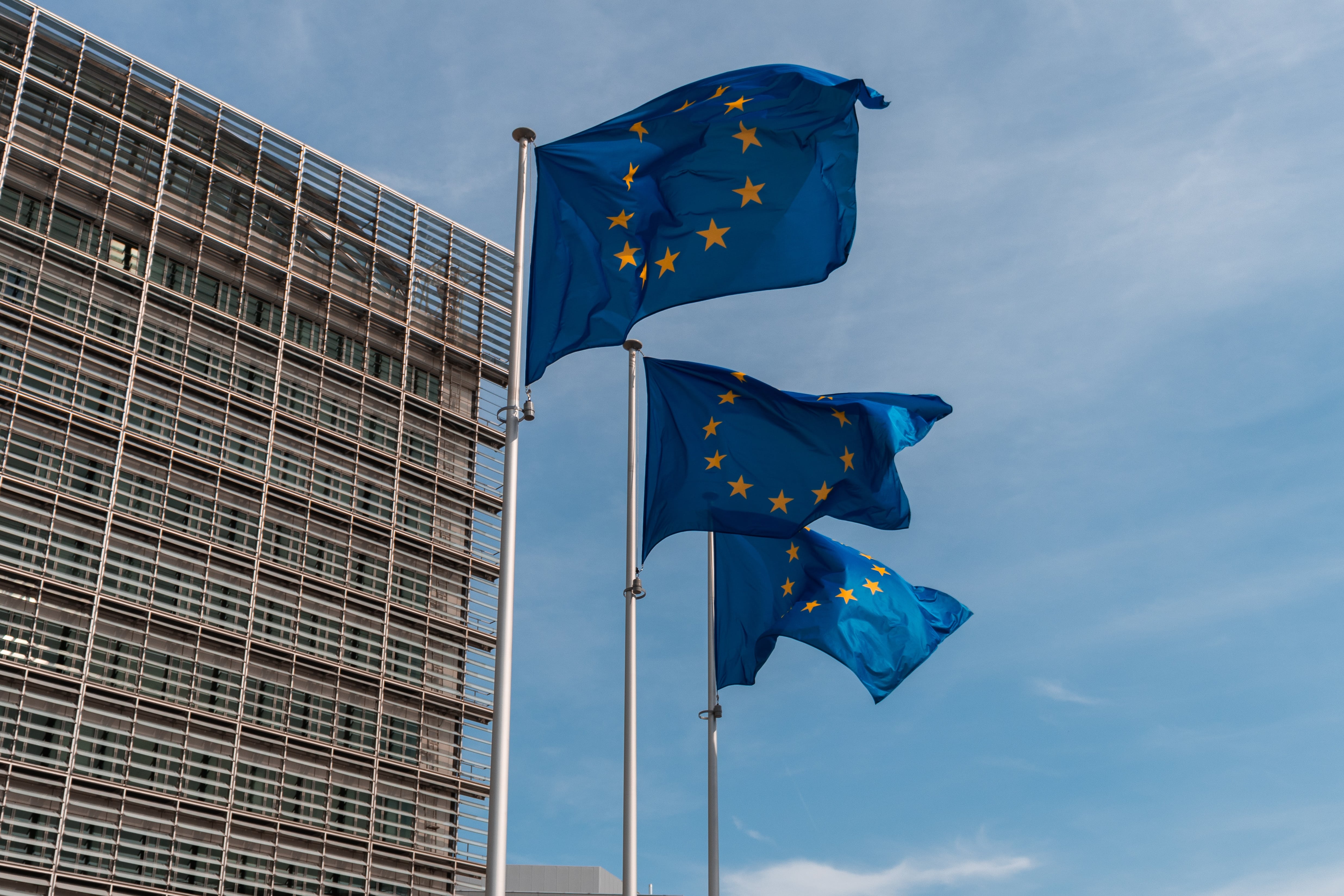
Policy WG meeting: Role of EU Missions in FP10
ERRIN has been closely involved in the design and implementation of the EU Missions since their inception. Missions remain one of the network's priorities and were one of the four main areas of focus
WG Related Events
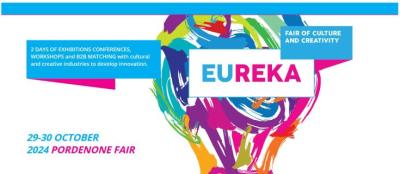
EUREKA 2024: Fair of culture and creativity - Friuli Venezia Giulia
Eureka 2024 is designed for the enterprises that want to boost their competitiveness and for all the culture and innovation enthusiasts. Take your unique opportunity to meet the cultural and creative industry leaders and engage in two days of exposition, B2B meetings, workshops and conferences. The event will take place in Pordenone, on 29-30 October.
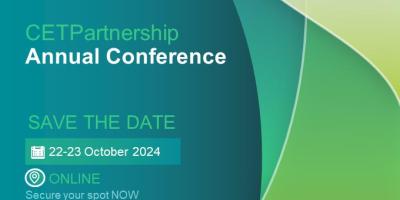
Clean Energy Transition Partnership Annual Conference 2024
The Clean Energy Transition Partnership is organising its annual conference online on 22-23 October 2024. During several sessions, participants will get the chance to contribute to important policy discussions, learn more about how CETPartnership contributes to achieving the clean energy transition goals and engage in networking with several stakeholders.
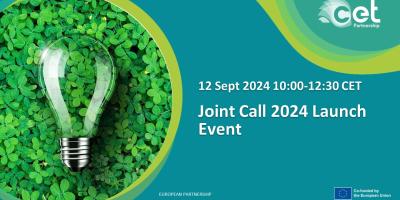
Launch Event of the Clean Energy Transition Partnership 2024 Call
The Clean Energy Transition Partnership launches its third Joint Call on 19 September 2024. On that occasion, they are organising a launch event to provide more information on what topics will be addressed in 2024 and to clarify all open questions about applying for the Joint Call 2024. The event will take place online on 12 September, 10:00-12:30.
Workshop on regional policies to promote the adoption of innovation by public administrations
The EU project Prepare brings together four regions that are interacting with the local ecosystems to design novel policies that promote demand-driven co-creation for the benefit of local public services, SMEs and citizens. The aim is to help unlock the potential of innovation procurement to turn regional needs into opportunities. A workshop with thematic insights, resources and best practices will take place on 27 June from 9:00-12:30 in Brussels.
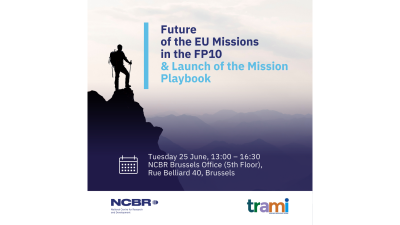
Future of the EU Missions in the FP10 & Launch of the Mission Playbook
The TRAMI Project, cordially invites you to join an inspiring discussion on the future of the EU Missions and the launch of the TRAMI Mission Playbook. The event will be held in NCBR Office in Brussels (Rue Belliard 40, Brussels, 5th Floor) on 25 June, 13:00–16:00.
Towards a research agenda for the EU Mission on Climate-neutral and Smart Cities
Researchers who have actively worked with Pilot Cities or Mission Cities within the frame of the EU Mission on 100 Climate-neutral and Smart Cities by 2030 are invited to join a collaborative event geared towards advancing research in the Cities Mission. The event aims to develop and foster a robust network of universities and research institutions actively engaged in this endeavour while allowing participants to learn more about the NetZeroCities project and the Mission Cities and potentially develop shared research outputs. The event will be organised on 25 June in Valencia, Spain.
WG Documents
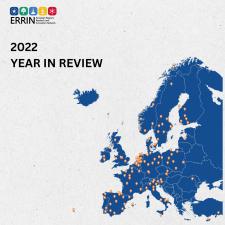
ERRIN Year in review 2022
The ERRIN Year in review 2022 is out! Read the report to see the numerous activities ERRIN and its members have been involved in throughout the year.

Letter on Cities' Concerns: Mission on Climate-Neutral and Smart Cities
The Smart Cities WG leaders developed a letter directed towards the Mission Manager and the Mission Secretariat of the Mission on Climate-Neutral and Smart Cities, as a follow-up from the Smart Cities WG meeting on the Cities Mission and the Expression of Interest in November 2021.

Handbook on implementation and adoption barriers of urban living labs developing nature-based solutions
Developing Urban Living Labs is a relatively novel approach in urban areas, and consequently, there are many challenges and barriers that cities face during ULL adoption. This handbook, developed by the UNaLab project, aims to identify and explore some common barriers to the adoption of Urban Living Labs, and provide cities with a tool and an understanding of how to strategically address these barriers.

ERRIN Input to the City Mission Implementation Plan
Please find attached ERRIN's input to the Implementation Plan of the Mission on climate-neutral and smart cities.

ERRIN Contribution to the City Mission Interim Report and the Green Deal Call 1.2
Please find attached ERRIN's contribution to the interim report of the Mission on Climate Neutral and Smart Cities and the Green Deal Call 1.2.

Report by the Mission Board: 100 climate neutral cities by 2030 - by and for the citizens
The latest version of the interim report by the Mission Board on Climate Neutral and Smart Cities.
WG Related Content
Third Call for Proposals EUI - Innovative Actions
The third EUI-Innovative Actions (EUI-IA) Call for Proposals is launched now and will close on 14 October 2024 at 14.00 CEST with an allocated indicative budget of EUR 90 million ERDF. Each project can receive up to a maximum of 5 million EUR ERDF co-financing and project implementation should take place within a maximum period of 3.5 years.
The Forward-Looking Survey - European Urban Initiative
The European Urban Initiative (EUI) has launched a forward-looking survey to gather vital insights from urban practitioners and policymakers across Europe. This survey, hosted on Portico, aims to identify key trends, challenges, knowledge gaps and support needs in European sustainable urban development. The survey will be open from 6 June until 12 July.
ERRIN two-pager for European decision-makers
ERRIN is pleased to share a two-pager for the incoming European decision-makers, aiming to present the network and our value to the new MEPs, raising a voice for the importance of place-based R&I in the changing landscape. We encourage all ERRIN members to share the document with their MEPs to introduce ERRIN and the value of place-based R&I.
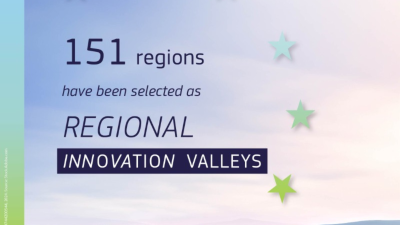
Over 70 ERRIN member regions announced as Regional Innovation Valleys
On 19 June, the Commission announced the 151 regions identified as Regional Innovation Valleys following the call for EoI and calls for proposals in 2023. 74 successful regions come from ERRIN members. RIVs will aim to strengthen the regional innovation ecosystems, bridge the innovation gap and improve Europe's overall innovation performance. New calls for proposals under Horizon Europe are expected in 2025.
EIB's Circular City Centre (C3) initiative continues: support to thrive the circular transition in cities
The European Investment Bank is launching a new support phase of their Circular City Centre (C3) scheme. The C3 targets cities and the public sector promotors on their behalf and offers advice on their circular economy agenda and investment projects. Cities can benefit from guidance documents, resources, circular city advisory and capacity building workshops and project advisory services.
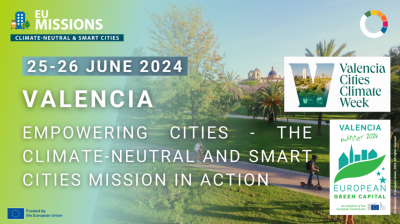
ERRIN at the Cities Mission Conference and EURESFO 2024
This year, the Cities Mission Conference will take place in Valencia, Spain, on 25-26 June. ERRIN will participate in the conference as a partner in the NetZeroCities project, which manages the Cities Mission Platform. As the event is partly organised in collaboration with the European Urban Resilience Forum this year, ERRIN will also be there to promote its two Mission Adaptation projects: RESIST and Pathways2Resilience.
Latest Updates
- By Daniele Ruggiano
The Forward-Looking Survey - European Urban Initiative
The European Urban Initiative (EUI) has launched a forward-looking survey to gather vital insights from urban practitioners and policymakers across Europe. This survey, hosted on Portico, aims to identify key trends, challenges, knowledge gaps and support needs in European sustainable urban development. The survey will be open from 6 June until 12 July.
- By Daniele Ruggiano
Third Call for Proposals EUI - Innovative Actions
The third EUI-Innovative Actions (EUI-IA) Call for Proposals is launched now and will close on 14 October 2024 at 14.00 CEST with an allocated indicative budget of EUR 90 million ERDF. Each project can receive up to a maximum of 5 million EUR ERDF co-financing and project implementation should take place within a maximum period of 3.5 years.
- By Ewa Chomicz
ERRIN two-pager for European decision-makers
ERRIN is pleased to share a two-pager for the incoming European decision-makers, aiming to present the network and our value to the new MEPs, raising a voice for the importance of place-based R&I in the changing landscape. We encourage all ERRIN members to share the document with their MEPs to introduce ERRIN and the value of place-based R&I.
- By Ewa Chomicz
Over 70 ERRIN member regions announced as Regional Innovation Valleys
On 19 June, the Commission announced the 151 regions identified as Regional Innovation Valleys following the call for EoI and calls for proposals in 2023. 74 successful regions come from ERRIN members. RIVs will aim to strengthen the regional innovation ecosystems, bridge the innovation gap and improve Europe's overall innovation performance. New calls for proposals under Horizon Europe are expected in 2025.
- By Astrid Hannes
EIB's Circular City Centre (C3) initiative continues: support to thrive the circular transition in cities
The European Investment Bank is launching a new support phase of their Circular City Centre (C3) scheme. The C3 targets cities and the public sector promotors on their behalf and offers advice on their circular economy agenda and investment projects. Cities can benefit from guidance documents, resources, circular city advisory and capacity building workshops and project advisory services.

- By Rodolphe Doité
AI for local and regional authorities – Survey for the Committee of the Regions stakeholders’ consultation
The ERRIN ICT WG wishes to collect ERRIN’s members’ needs, challenges and solutions related to Artificial intelligence in order to answer the CoR stakeholders' consultation, expected in September 2024.