Key priorities in the field of R&I are primarily based on the areas covered by the RIS3 Lead Markets (see below) and include related issues such as internationalisation, interregional cooperation (interregional innovation investments, Interreg Europe etc.) and the future of research, innovation and smart specialisation in the context of the COVID pandemic, the European Green Deal and the (just) transition to a low-carbon economy as well as societal challenges such as digitisation and demographic change, including its effects on public services and the health sector.
The Representation of Saxony-Anhalt to the EU is part of the State Chancellery and Ministry for Cultural Affairs and, as such, represents the interests of the regional government. We also work closely with regional stakeholders such as universities, research organisations and trade associations.
The representation’s team has substantial experience of working in R&I policy and practice.
Contact detail
-
Contact person
-
Brussels Office Address
Boulevard Saint Michel 80
1040 Brussels
Belgium
S3 Strategy
As part of the regional smart specialisation process, Saxony-Anhalt set out its Regional Innovation Strategy (RIS3) 2014-2020. Building on earlier strategies, the RIS3 includes five priority areas (“Lead Markets”) which were identified on the basis of key regional strengths and with a view to identifying future global challenges and opportunities. The Lead Markets are:
- Energy, Engineering and Factory Construction, Resource Efficiency
- Health and Medicine
- Mobility and Logistics
- Chemistry and Bioeconomy
- Food and Agriculture
Accompanying the Lead Markets are three cross-sectoral areas (ICT, Nanotechnology, Microtechnology) seen as vital components for successful innovation in all industries. As key technologies, the cross-sectoral fields can link activities in the Lead Markets, thereby enabling a holistic approach to innovation.
In implementing and monitoring RIS3, specific projects and activities within the Lead Markets and cross-sectoral fields have been developed on the basis of the entrepreneurial discovery process (EDP).
The main RIS3 governance structure bodies are:
- An advisory council to the Ministry of Economy, Science and Digitalisation (“Cluster- und Innovationsbeirat”)
- An inter-ministerial working group
- A RIS secretariat within the Ministry of Economy, Science and Digitalisation
Five working groups for each of the Lead Markets, bringing together relevant stakeholders.
Strategic R&I Projects
Beyond EDP
How can we stimulate European businesses, knowledge institutes, and relevant partners to join forces to discover new ideas which could lead to innovation? Beyond EDP focuses on this question aiming to strengthen the entrepreneurial discovery process in Europe and boosting the Regional Innovation smart specialisation strategy (RIS3) adopted in 2014.
WEBSITE>
S3Chem
Chemical innovations are important for many downstream industries and foster solutions for societal challenges such as energy, new materials, etc. S3Chem aims to improve the implementation of RIS3 with focus on chemical-related topics through interregional exchange of experiences and mutual learning between public authorities from seven European chemical regions.
WEBSITE>
Deep Health
The project DeepHealth will combine High-Performance Computing infrastructures with Deep Learning and Artificial Intelligence techniques to support biomedical applications that require the analysis of large and complex biomedical datasets and thus, new and more efficient ways of diagnosis, monitoring and treatment of diseases.
WEBSITE>
EpiDiverse
EpiDiverse is a Marie Skłodowska-Curie Innovative Training Network aimed at the study of epigenetic variation in wild plant species. Understanding the epigenetic contribution to adaptive capacity will help to better understand species responses to global environmental change, and can open new directions for sustainable agriculture and crop breeding.
WEBSITE>
Latest Tweets
Latest Tweets
Latest Updates
- By Astrid Hannes
Open call for technical assistance: Harnessing talent, empower regions
Until 20 October 2023, 46 regions that have been identified as facing a sharp working-age population decline, in combination with a low and stagnating share of people with tertiary education and brain drain can apply for an open call for technical assistance under the Talent Booster Mechanism.
- By Daniel Wentzlaff
The EU Chips Act – How semiconductor ecosystems increase competitiveness in Europe’s regions
Saxony-Anhalt, together with Intel, is hosting the event 'The EU Chips Act – How semiconductor ecosystems increase competitiveness in Europe’s regions' on 7 December from 18:00-20:00.
- By Daniel Wentzlaff
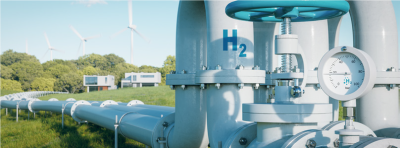
Saxony-Anhalt as a model region for green hydrogen
On 7 November in Brussels, the Minister for Science, Energy, Climate Protection and Environment of the State of Saxony-Anhalt, Prof Dr Armin Willingmann, is organising an event "Saxony-Anhalt on the way to a model region for green hydrogen – chances and challenges in the context of European energy and climate policy".

- By Gianpiero Petruzziello
Boosting green growth: Opportunities in Circular Bioeconomy to enable sustainable transformation of European industry
The Representation of the State of Saxony-Anhalt to the EU together with UPM are organizing on 17 May the event ‘Boosting green growth: Opportunities in Circular Bioeconomy to enable sustainable transformation of European industry’. The event will focus on the role of the circular bioeconomy in the EU's green transition.

- By Silke Antos
YOUMOBIL Final Conference “Boosting Youth Rural Mobility”
On Thursday, 17th March 2022, the final conference of the Interreg Central Europe project YOUMOBIL will take place as a hybrid conference – online and in Weißenfels (Saxony-Anhalt, Germany).
- By Silke Antos
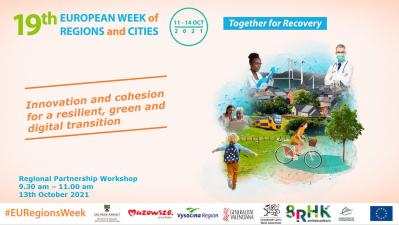
EWRC 2021: Innovation and cohesion for a resilient, green and digital transition
The workshop will highlight different regional best practices, which will showcase from multiple angles how cohesion funds support citizens by placing them centre stage. The common objective at the subnational level is to enable the transition towards a sustainable and digital society.