
Science & Education for Society

The Slovenian Business and Research Association (SBRA) is a Brussels-based liaison office of the most successful Slovenian organisations from both the public and private sectors. Established in 1999 as an international non-profit association connecting business, research and local communities in Slovenia with the EU institutions and other public and private bodies at the EU level. SBRA members represent a wide spectrum of Slovenian interests, from the fields of business and research. As of 2019, SBRA acts as the Secretariat and host institution of the Network of European Financial Institutions for Small and Medium-Sized Enterprises (NEFI). During 2011 – 2023, SBRA also has been acting as the Secretariat of the Knowledge Economy Network (KEN).
Contact detail
-
Contact person
-
Brussels Office Address
Rue Belliard 40
1040 Brussels
Belgium
Latest Tweets
Latest Tweets
Latest Updates
- By Astrid Hannes
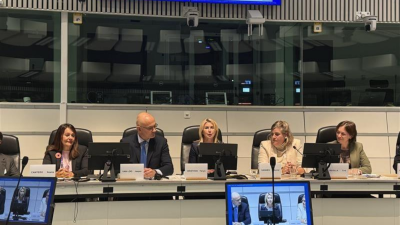
Europe's skills revolution starts in its regions and the new RESET tool can help them
The European Centre for the Development of Vocational Training has just launched a new tool to help regions address their skills challenges. Launched on 8 October at the Committee of the Regions, the new RESET tool is the first multidimensional EU regional index and provides a regional lens on skills and vocational education and training (VET). The tool discloses detailed data about skills demand, skills supply, skills environments and skills mismatches of 244 regions across 27 Member-States.
- By Asja Masnoglav
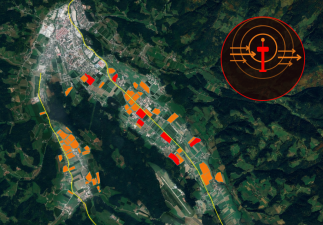
Municipal Pilot Site Slovenj Gradec is looking for partners for Horizon Europe CL 6 Zero Pollution Calls
The Municipality of Slovenj Gradec is looking for partners for the HORIZON-CL6-2027-01-ZEROPOLLUTION-02 or 03. The Municipality of Slovenj Gradec offers a geographically bounded "Living Lab" in a closed Alpine basin characterized by extreme temperature inversions and low wind speeds that trap agricultural aerosols.
- By Zoé Thomazeau
ERRIN members selected as NEB Prizes finalists
The New European Bauhaus (NEB) Prizes celebrate innovative projects and ideas that embody NEB values: sustainability, inclusivity and beauty. The NEB Prizes 2026 finalists have been announced and ERRIN is pleased to see so many of them coming from its member regions.
- By Astrid Hannes
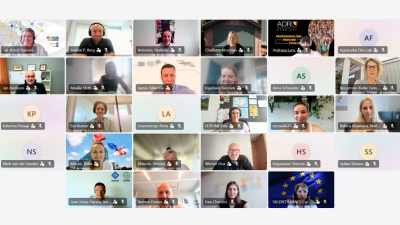
Strengthening the skills base for defence, security and preparedness in Europe's regions: key take-aways of ERRIN's second Skills for Resilience Talk
On 25 June, over 45 ERRIN members gathered for ERRIN's second online Skills for Resilience Talk, which was dedicated to regional skills development and capacity building programmes in the field of defence and security. This offered an excellent occasion to exchange with the European Committee of the Regions Working Group on Defence and learn about the InDefense programme of Linköping University in Östergotland in Sweden, a university-led and ecosystem-delivered short track programme aiming to create an innovation ecosystem for total-defence including students, researchers, business, organisations and authorities, to turn real-world security and preparedness challenges into innovative prototypes and policy solutions.
- By Bostjan Sinkovec
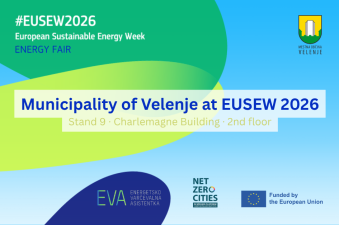
Invitation to visit the Municipaliy of Velenje’s stand at the EUSEW
The Municipality of Velenje invites participants to visit its stand at the European Sustainable Energy Week (EUSEW) 2026 Energy Fair (9–11 June 2026), where it will showcase its transition from a former coal-dependent city to a climate-neutral, innovation-driven, and citizen-focused urban environment. The stand will feature initiatives supporting clean energy, sustainable mobility and citizen engagement, including the Horizon Europe-funded ZERO MOVE project, which promotes low-carbon transport solutions through an interactive carbon footprint game and EVA, a digital platform that helps households optimise energy consumption, plan renovations, reduce costs and lower CO₂ emissions. As a living laboratory for sustainable urban innovation, Velenje collaborates with residents, experts, municipalities, research organisations, universities and companies across Europe to accelerate the clean energy transition and improve quality of life, while offering visitors opportunities to exchange knowledge, strengthen partnerships, explore future Horizon Europe collaborations and promote citizen-centred approaches to urban development.
- By Astrid Hannes
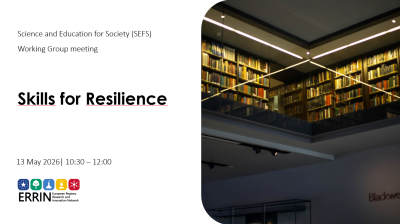
ERRIN’s first online skills session puts Skills for Resilience at the heart of Europe’s regions
The first online ERRIN Skills Talk, held on 13 May gathered over 60 regional higher-education representatives, vocational education and training (VET) providers, regional policymakers as well as the Joint Research Centre of the European Commission. Aiming at deepening the understanding about capacity building activities that are emerging across Europe’s regions to increase the territorial resilience, several regional stakeholders presented regional initiatives to align education, research, industry and public actors around resilience skills. Read more about the regional education and training initiatives in this article.