
EU Framework for Climate Resilience: what does it mean for regions and cities?
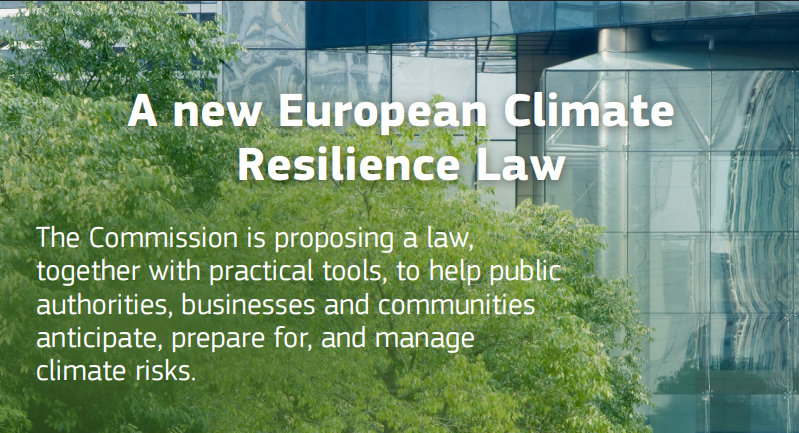
On 27 October, the European Commission presented the EU Framework for Climate Resilience, setting out a more coordinated approach to anticipating, preparing for and managing climate risks. The package combines a policy Communication, a proposed European Climate Resilience Law and practical tools to support implementation.
The framework addresses a policy priority that ERRIN’s Climate Adaptation and Resilience Working Group has actively contributed to over the past year, bringing regional experiences and recommendations into the Commission’s consultations.
The framework is an overarching package, rather than a single piece of legislation. Its Communication sets out the Commission’s policy direction: moving from responding to climate-related disasters towards systematically anticipating risks and integrating resilience into policies and investment decisions. The Communication does not itself create binding legal obligations.
The accompanying European Climate Resilience Law is a proposal for a regulation, which must still be negotiated and adopted by the European Parliament and Council. Its proposed requirements should therefore be distinguished from obligations already in force.
The legislative approach centres on a common climate reference scenario, climate risk assessments, clearer responsibility for managing major risks and national strategic resilience plans. These elements would establish a more consistent basis for planning across Member States, including preparation for a global warming trajectory reaching 3°C by 2100. This is a reference for preparedness, alongside continued efforts to reduce emissions.
Alongside the policy and legislative elements, the framework brings together online tools to help public authorities and other stakeholders understand climate risks and identify possible responses:
- European Climate Viewer: provides maps and indicators to explore how climate hazards could evolve in different locations, supporting risk assessments and planning.
- Navigator of Climate Resilience Tools: helps users identify relevant tools according to their needs, location and the risks they face.
- Mission Solutions Explorer: a repository showcasing adaptation solutions developed through the EU Mission on Adaptation to Climate Change, helping regions and cities identify approaches that could be adapted, replicated or scaled in their own territories.
These tools connect climate information with practical experience, making knowledge and solutions more accessible to those responsible for implementation.
For regions and cities, the framework raises questions about how European and national priorities will translate into territorial planning, investment and delivery. Clearer responsibilities and a shared understanding of future risks could support better coordination. Their effectiveness will also depend on regional involvement in decision-making and access to the capacity and resources needed to act.
These have been central messages in ERRIN’s work through the Climate Adaptation and Resilience Working Group. Its contribution on climate resilience and risk management called for an integrated, place-based approach, stronger accountability, streamlined reporting and financing accessible to regions and municipalities with different capacities. Building on this work, ERRIN’s response to the consultation on the European Climate Resilience Framework, published in March 2026, stressed that regions and cities must be recognised as co-designers and co-implementers of resilience strategies. The position paper calls for responsibilities to be accompanied by adequate administrative capacity and predictable financial resources, and for climate resilience to be embedded across legislation and funding programmes. Drawing on member input and experience from RESIST, Pathways2Resilience and AdaptationHubs, ERRIN has also highlighted the importance of sustaining the Mission approach and connecting research and innovation with the deployment of adaptation solutions.
As the proposed regulation moves into negotiations, key issues for ERRIN members will be how regional participation is reflected in governance arrangements, how planning connects with investment decisions, and what support reaches the authorities responsible for implementation.
Find more information on the framework on the Commission’s website.
- Gaia Ialisa Marotta
- 27/10/2026
-
Working Group