
EU strengthens Water Protection
On 11 May 2026, the Directive revising the lists of pollutants in surface and groundwaters entered into force. It amends the Water Framework Directive (2000/60/EC), the Groundwater Directive (2006/118/EC) and the Environmental Quality Standards Directive (2008/105/EC).
Based on the latest scientific evidence, the Directive adds several newly identified substances to the EU lists of controlled pollutants in both surface waters and groundwaters:
- Specific PFAS (per- and polyfluoroalkyl substances), including trifluoroacetic acid (TFA).
- Certain pesticides and pharmaceuticals, including estrogenic compounds.
- Bisphenol-A.
- Microplastics and indicators of antimicrobial resistance (AMR).
Sensitive groundwater ecosystems are now explicitly recognised, with Member States encouraged to set stricter standards where needed.
However, the Directive allows a more flexible application of the non-deterioration principle. Temporary improvement works (e.g., bridge reconstruction, flood protection) and pollution relocation without net increase (e.g., dewatering, sediment dredging) may now proceed subject to strict safeguards.
PFAS: A priority concern
PFAS have been detected at more than 70 % of groundwater measuring points across the EU, with existing national threshold values exceeded at a considerable number of locations.
This Directive introduces a quality standard for the group of 20 PFAS already listed in the Drinking Water Directive, a quality standard for the sum of the four most problematic PFAS (aligned with the value proposed by the European Food Safety Authority – EFSA) and an encouragement for Member States to monitor total PFAS (‘PFAS Total’) in groundwater using guidance under the Drinking Water Directive.
Implications for public authorities
As a result of this revision, Member States and their competent authorities face a number of concrete obligations and deadlines:
- Transposition deadline: 22 December 2027. All three amended Directives must be incorporated into national law.
- River Basin Management Plans (RBMPs) and Programmes of Measures (PoMs) must be updated to reflect the new and revised quality standards.
- Monitoring programmes must be extended to cover newly listed substances.
- Effect-based monitoring is introduced as a new tool: rather than testing for individual pollutants, authorities will need to assess the combined risk to water quality.
- Reporting obligations are partially simplified; Member States will share monitoring data with the Commission through digital tools to be developed with the European Environment Agency.
How can local and regional authorities support fighting PFAS pollution? – Key takeaways
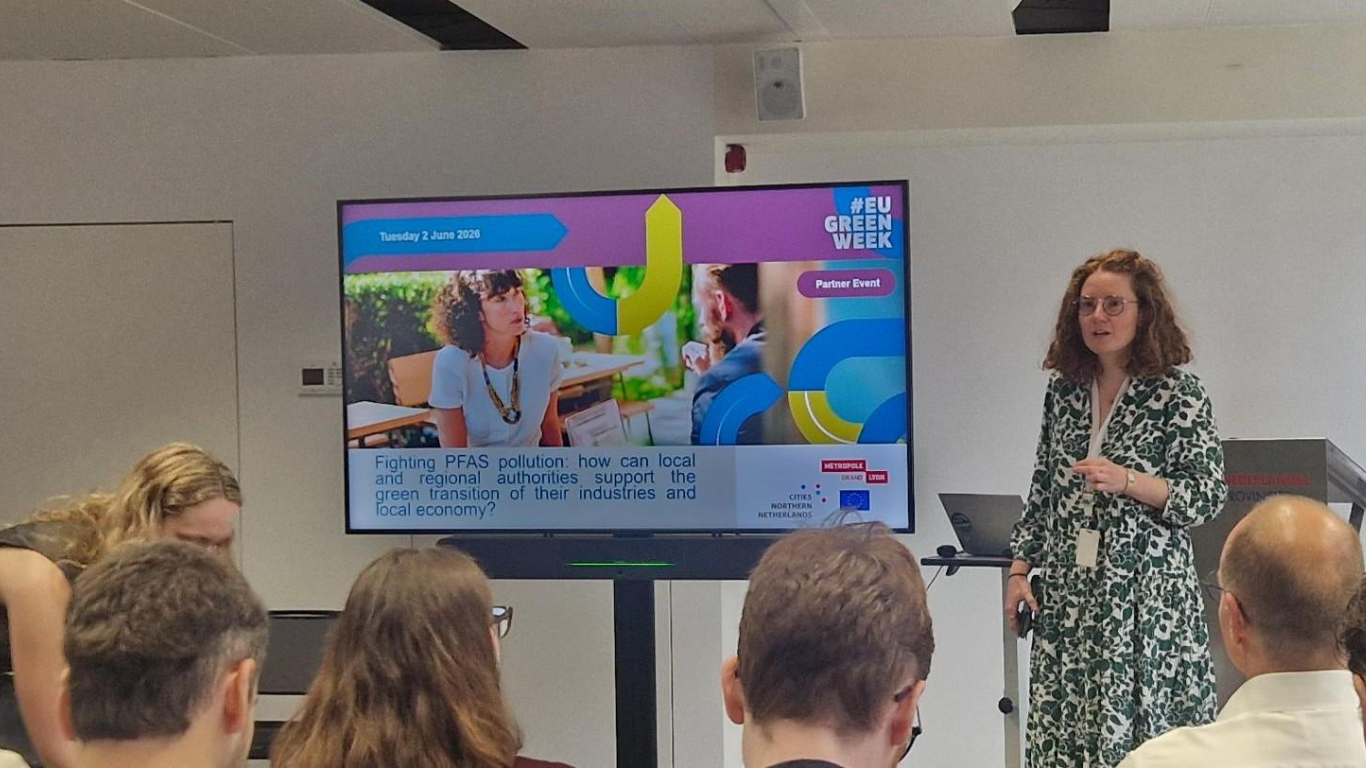
While the Directive establishes the legal framework, it is local and regional authorities (LRAs) that face the operational reality of PFAS contamination on the ground. European territories affected by this pollutant gathered together on Tuesday 2 June to illustrate the complexity of that challenge in an event organised jointly by Lyon Metropole and Cities Northern Netherlands.
Lyon, a major petrochemical hub, must simultaneously manage contaminated groundwater and soils. Leeuwarden deals with an estimated 18,000 hectares of PFOS-contaminated land stemming largely from firefighting foam. In Flanders, the hotspots such as the 3M plant in Zwijndrecht and the textile industry in Ronse (Renaix) has driven the development of an integrated coordination model that aligns local, provincial, regional and federal administrations under a single mediation structure.
A shared message across all three territories was the difficulty of accessing EU funding, such as competitive Horizon Europe calls. The Water4All partnership and its Water-Oriented Living Labs were flagged by DG RTD’s Bertrand Vallet as valuable alternatives, particularly for testing. Another common point was the importance of structured peer learning and knowledge exchange between territories.
Linked to this, the European Commission’s DG GROW introduced the EU Innovation and Substitution Hubs. These Hubs can help companies (in particular SMEs) transition away from hazardous substances such as PFAS toward safer alternatives. The Hubs operate through a three-tier architecture: a central EU hub providing coordination and orientation, national and regional hubs offering practical local support and independent contributing organisations supplying specialist expertise. On top of that, three operational workstreams structure their activities: strategic analysis and prioritisation, innovation and scale-up support and networking and capacity building. As underlined by DG GROW’s Maria Laia Perez Simbor, the comparative advantage of LRAs in this context lies precisely in their knowledge of local industries, research ecosystems and infrastructure needs.
Next steps
Future reviews (led by the European Chemicals Agency - ECHA) will consider bisphenols as a group and cumulative risk from pharmaceuticals grouped by mode of action. More reliable monitoring methods for microplastics and standards for total PFAS in surface waters, a separate TFA standard and practical guidance for effect-based monitoring are also envisaged.
- Ana Nava
- 03/06/2026
-
Working Group