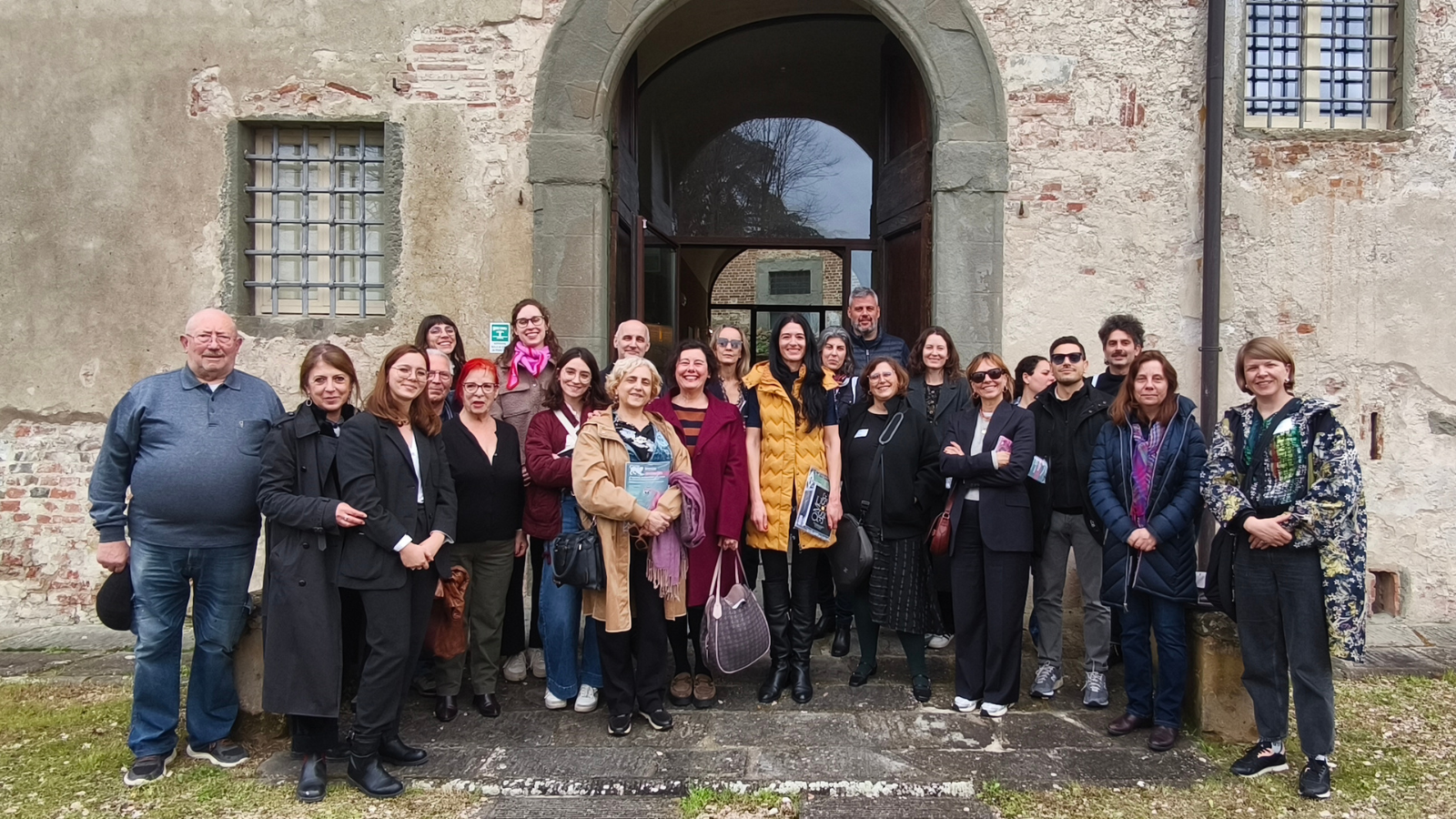
NEB Experimentation Journey in-person session in Tuscany
As part of the EU Preparatory Action Innovation for Place-Based Transformation, coordinated by the Joint Research Centre (JRC), the New European Bauhaus (NEB) Experimentation Journey convened its fifth session in Tuscany from 3–5 March 2026. Hosted by the Region of Tuscany, the meeting was facilitated by the consortium, including Climate KIC, ERRIN and EURADA, in close cooperation with Codesign Toscana and JRC NEB Unit.
Bringing together regional representatives from across Europe, the three-day event marked the mid-point of the Experimentation Journey and a key milestone in the programme. It provided a space for peer exchange, reflection and hands-on learning, with a strong focus on how NEB principles can be implemented in practice through place-based experimentation.
A programme rooted in experience and exchange
The session opened in Florence with a cultural site visit and an informal welcome, offering participants an opportunity to connect ahead of the working programme. The second day began with a collective introduction to the local context, providing insights into how the host region approaches NEB experimentation. Participants were introduced to a structured methodology that was applied to the Toscana Accessibile programme, which emphasises iterative learning, stakeholder engagement, and an open discovery process for developing projects to advance inclusive and accessible cultural heritage.
This was followed by a peer exchange session, where regions shared the current state of their experimentation journeys. These discussions highlighted both the diversity of approaches across territories and the common challenges faced when translating NEB values into practice. The exchange created space for reflection on progress, expectations, and next steps, fostering mutual learning and inspiration.
Discovering NEB in practice: Site visits across Tuscany
A central component of the session was a series of site visits across Tuscany, offering the opportunity to experience NEB principles first-hand through visits to local initiatives, funded through the Toscana Accessibile programme, which are focused on accessibility and inclusion within cultural heritage.
Participants visited two municipalities to explore projects that are redefining how public spaces and cultural institutions can be made more accessible and engaging for all. These site visits provided concrete examples of how NEB values, sustainability, inclusion and aesthetics, can be integrated into real-world interventions. They also highlighted the importance of local context, cross-sector collaboration, and long-term commitment in achieving meaningful impact.
Learning through dialogue and co-design
The final day focused on collective reflection and co-design. Building on the site visits and exchanges, participants worked to advance their NEB experimentation pathways, refine their approaches and identify concrete next steps for the last months of the programme. Interactive discussions and informal exchanges enabled deeper learning, helping translate inspiration from Tuscany into actionable ideas tailored to each regional context.
The session reinforced the importance of testing solutions in real-life settings, learning across territories and fostering collaboration. Participants left with strengthened connections, practical insights and renewed momentum for the final phase of the Experimentation Journey.
About the programme
The NEB Experimentation Journey is part of the EU Preparatory Action Innovation for Place-Based Transformation, led by the European Commission’s Joint Research Centre. The programme supports regions in testing and implementing place-based innovation approaches to address complex societal challenges, contributing to the objectives of the New European Bauhaus.