Key priorities in the field of R&I are primarily based on the areas covered by the RIS3 Lead Markets (see below) and include related issues such as internationalisation, interregional cooperation (interregional innovation investments, Interreg Europe etc.) and the future of research, innovation and smart specialisation in the context of the COVID pandemic, the European Green Deal and the (just) transition to a low-carbon economy as well as societal challenges such as digitisation and demographic change, including its effects on public services and the health sector.
The Representation of Saxony-Anhalt to the EU is part of the State Chancellery and Ministry for Cultural Affairs and, as such, represents the interests of the regional government. We also work closely with regional stakeholders such as universities, research organisations and trade associations.
The representation’s team has substantial experience of working in R&I policy and practice.
Contact detail
-
Contact person
-
Brussels Office Address
Boulevard Saint Michel 80
1040 Brussels
Belgium
S3 Strategy
As part of the regional smart specialisation process, Saxony-Anhalt set out its Regional Innovation Strategy (RIS3) 2014-2020. Building on earlier strategies, the RIS3 includes five priority areas (“Lead Markets”) which were identified on the basis of key regional strengths and with a view to identifying future global challenges and opportunities. The Lead Markets are:
- Energy, Engineering and Factory Construction, Resource Efficiency
- Health and Medicine
- Mobility and Logistics
- Chemistry and Bioeconomy
- Food and Agriculture
Accompanying the Lead Markets are three cross-sectoral areas (ICT, Nanotechnology, Microtechnology) seen as vital components for successful innovation in all industries. As key technologies, the cross-sectoral fields can link activities in the Lead Markets, thereby enabling a holistic approach to innovation.
In implementing and monitoring RIS3, specific projects and activities within the Lead Markets and cross-sectoral fields have been developed on the basis of the entrepreneurial discovery process (EDP).
The main RIS3 governance structure bodies are:
- An advisory council to the Ministry of Economy, Science and Digitalisation (“Cluster- und Innovationsbeirat”)
- An inter-ministerial working group
- A RIS secretariat within the Ministry of Economy, Science and Digitalisation
Five working groups for each of the Lead Markets, bringing together relevant stakeholders.
Strategic R&I Projects
Beyond EDP
How can we stimulate European businesses, knowledge institutes, and relevant partners to join forces to discover new ideas which could lead to innovation? Beyond EDP focuses on this question aiming to strengthen the entrepreneurial discovery process in Europe and boosting the Regional Innovation smart specialisation strategy (RIS3) adopted in 2014.
WEBSITE>
S3Chem
Chemical innovations are important for many downstream industries and foster solutions for societal challenges such as energy, new materials, etc. S3Chem aims to improve the implementation of RIS3 with focus on chemical-related topics through interregional exchange of experiences and mutual learning between public authorities from seven European chemical regions.
WEBSITE>
Deep Health
The project DeepHealth will combine High-Performance Computing infrastructures with Deep Learning and Artificial Intelligence techniques to support biomedical applications that require the analysis of large and complex biomedical datasets and thus, new and more efficient ways of diagnosis, monitoring and treatment of diseases.
WEBSITE>
EpiDiverse
EpiDiverse is a Marie Skłodowska-Curie Innovative Training Network aimed at the study of epigenetic variation in wild plant species. Understanding the epigenetic contribution to adaptive capacity will help to better understand species responses to global environmental change, and can open new directions for sustainable agriculture and crop breeding.
WEBSITE>

Latest Tweets
Latest Tweets
Latest Updates
- By Zoé Thomazeau
ERRIN members selected as NEB Prizes finalists
The New European Bauhaus (NEB) Prizes celebrate innovative projects and ideas that embody NEB values: sustainability, inclusivity and beauty. The NEB Prizes 2026 finalists have been announced and ERRIN is pleased to see so many of them coming from its member regions.

- By Astrid Hannes
Four years on: Celebrating Circular Cities and Regions Pilots’ achievements in driving circular change across Europe
Local and regional authorities across Europe are increasingly committed to the circular economy, yet many still ask the same question: what does implementation look like in practice? A new publication of the Circular Cities and Regions Initiative (CCRI) presents circular systemic solutions which were implemented by twelve Circular Pilot Cities and Regions from 2022-2025. Providing concrete answers and pathways for replication, the pilot solutions span different territorial contexts – from small municipalities to large regions – and cover a wide range of value chains, including construction and the built environment, circular resource management, bioeconomy and nutrient recovery, consumer goods, packaging and food systems.

- By Astrid Hannes
New report: Circular Cities and Regions Pilot Solutions: Insights, impacts, and replication paths
From 2023 until 2025, the Circular Cities and Regions Initiative has supported 12 European cities and regions to test what it really takes to turn circular economy ambition into practical, local and systemic solutions. Their examples in developing Circular Systemic Solutions (CSS) across various sectors and focus priorities form the foundation of this booklet. This compilation brings together the insights and solutions developed through the CCRI Pilot programme between January 2023 and October 2025. It highlights not only what the Pilots achieved, but how they did it: the partnerships they built, the barriers they faced, the tools they used and developed and the lessons that can help others accelerate their own transitions.

- By Zoé Thomazeau
ERRIN members to host events at the European Week of Regions and Cities 2025
The European Week of Regions and Cities will once again serve as a leading platform for dialogue on regional and urban policy in Europe. ERRIN is pleased to announce that its members will be strongly represented in this year’s programme, with sessions addressing a wide range of topics.
- By Astrid Hannes
Open call for technical assistance: Harnessing talent, empower regions
Until 20 October 2023, 46 regions that have been identified as facing a sharp working-age population decline, in combination with a low and stagnating share of people with tertiary education and brain drain can apply for an open call for technical assistance under the Talent Booster Mechanism.
- By Daniel Wentzlaff
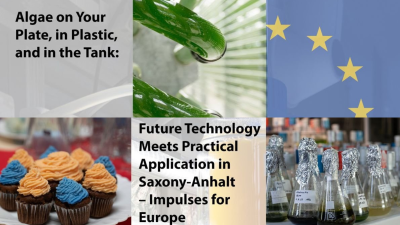
Algae on your plate, in plastic and in the tank: Future technology meets practical application in Saxony-Anhalt – Impulses for Europe
The Ministry of Economy, Tourism, Agriculture and Forestry of Saxony-Anhalt and the Representation of the State of Saxony-Anhalt to the European Union are pleased to invite you to the event 'Algae on your plate, in plastic and in the tank: Future technology meets practical application in Saxony-Anhalt – Impulses for Europe'.