Four years on: Celebrating Circular Cities and Regions Pilots’ achievements in driving circular change across Europe
Over the period of 2022-2025, twelve Pilot Cities and Regions across Europe – Asker, Capannori, Castilla y Léon, Flanders, Gothenburg, Guimaraes, Helsinki-Uusimaa Circular Hub, Munich, Podravje, Maribor, Roubaix, Tampere Region, Uppsala – were supported under the Circular Cities and Regions Initiative (CCRI) to implement a circular systemic solution in their territories.
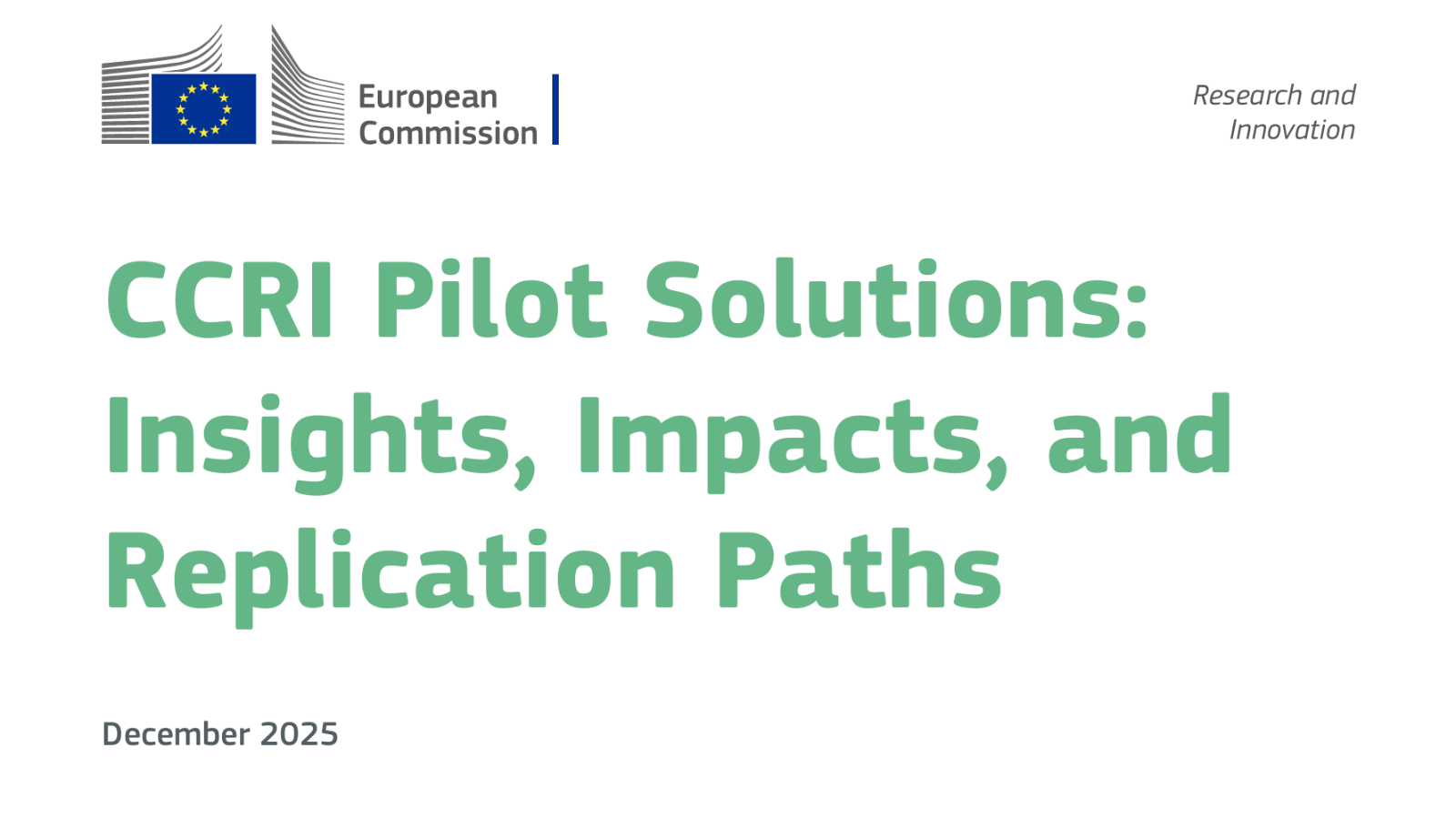
A new publication now bundles their solutions, while shedding light on the impact created and presenting replication pathways to inspire other cities and regions across Europe. These pilot solutions span different territorial contexts – from small municipalities to large regions – and cover a wide range of value chains, including construction and the built environment, circular resource management, bioeconomy and nutrient recovery, consumer goods, packaging and food systems.
A diversity of solutions, grounded in local realities
Rather than showcasing one-size-fits-all models, this publication highlights how circular economy ambitions were translated into context-specific Circular Systemic Solutions. Pilots explored diverse approaches such as:
- Reuse and circular procurement in public construction projects
- Advanced recycling and reuse systems for complex waste streams like textiles or hygiene products
- Industrial symbiosis and nutrient recovery from biowaste, digestate, and biomass residues
- Territorial governance platforms to coordinate actors across value chains
- Behavioural change initiatives engaging citizens, SMEs and public administrations
Together, these experiences demonstrate that circularity can be applied across very different sectors – provided that governance, data, financing and stakeholder engagement are aligned.
Measurable impacts, beyond individual projects
Across the twelve pilots, the results go beyond isolated experiments. You can learn about tangible impacts at scale, including:
- Over 2,700 people directly engaged and more than 220 stakeholders mobilised
- More than 21,000 tonnes of materials reused, recycled, or diverted from waste streams
- Significant reductions in packaging waste and increased production of biofertilisers and more
- Job creation, landfill cost savings and strengthened local circular value chains
Importantly, the pilots also document the barriers encountered – from regulatory uncertainty and market immaturity to capacity constraints – offering realistic insights for authorities facing similar challenges.
Designed to support replication
A key strength of this publication is its strong focus on replicability. Each pilot is presented using a common structure, covering:
- The initial challenge and policy context
- The circular solution tested and how it was developed
- Governance models and stakeholder roles
- Key results, lessons learnt and enabling factors
- Practical tips for replication by other cities and regions
This makes the publication a practical reference for public administrations at different stages of their circular journey – whether they are mapping opportunities, designing interventions, or moving into implementation.
An invitation to learn, adapt and act
Rather than promoting ready-made solutions, the Circular Cities and Regions initiative invites local and regional authorities to learn from peers, adapt proven approaches to their own context, and build confidence to move from strategy to action. This publication shows that while circular transitions are complex, they are achievable when supported by clear political commitment, evidence-based planning, and sustained collaboration. For regions and cities looking to accelerate their circular economy efforts, this collection offers both inspiration and a grounded starting point.
More information about the publication can be found here.
More about ERRIN's role in the CCRI
ERRIN is part of the Coordination and Support Office of the Circular Cities and Regions Initiative (2022-2026), leading stakeholder dialogues to collect inputs from cities and regions and their local stakeholders on support needs, challenges and R&I Gaps hindering the circular transition at the local level. You can learn more about ERRIN's role in the Circular Cities and Regions Initiative here. The second phase of the Circular Cities and Regions Initiative will run from approximately mid-2026 until 2029 and start as soon as the European Commission has contracted a new Coordination and Support Office (tender procedure ongoing).
The topic of circular economy is closely monitored by ERRIN's Bioeconomy Working Group, which will organise a meeting in the autumn of 2026 to inform the membership about the Circular Economy Act. During this meeting, participants will also learn about forthcoming opportunities for members of the second phase of the CCRI, which will include - among others - the launch of a call for new cities and regions to get involved for receiving expert support to implement a circular systemic solution locally, replication opportunities, capacity building and peer learning programmes and tailored investment advice to mature circular investment projects.
- Astrid Hannes
- 26/01/2026
-
Members
-
Working Group