
The Oslo Region European Office is a member organisation serving 17 members; counties, municipalities and universities in the capital region of Norway. Our mission is to create and develop new opportunities for our members by increasing knowledge, participation and visibility in European processes. We focus our work on areas related to the green transition (Energy, Climate, Circular Economy, Mobility and Bioeconomy) and inclusive societies (Health, Culture, Education, Youth, Social Inclusion). On behalf of our members, we are interested in EU funding for projects related to several specific challenges in the above-mentioned areas. The Oslo Region European Office does not take part directly in projects with EU funding, but plays a supportive role for our members by providing a platform for contact and bringing ideas to our members from the European policy-making cycle.
Contact detail
-
Brussels Office Address
Rue du Luxembourg 3
1000 Brussels
Belgium
Strategic R&I Projects
BOOST - Building social and emotional skills to BOOST mental health resilience in children and young people in Europe
BOOST is the result of a cooperative effort between different stakeholders in the field of health research, dissemination, education, and policy making. Through the development of an innovative approach, it aims to promote mental health and well-being.
WEBSITE>
MOVE21: European cities lead transition to zero-emission transport in urban areas
MOVE21, will help participating cities achieve a 30% reduction of transport-related emissions by 2030 via the implementation of 15 transport-related innovations. The project is coordinated by the City of Oslo.
The art of learning
The main objective of The Art of Learning for STEAM project (AoL4STEAM), is to further develop, implement and assess the innovative and creative approach in schools and classrooms, to develop children’s executive functions.
DIRTT PROJECT – THE PATH TO SUSTAINABLE MOUNTAIN BIKE TRAILS IN EUROPE
The aim is to develop trail building guidelines with an educational framework addressing the needs of professionals and volunteers in the sectors of trail planning, design, construction, maintenance and management.
Working Group Leaders


Latest Updates
- By Astrid Hannes
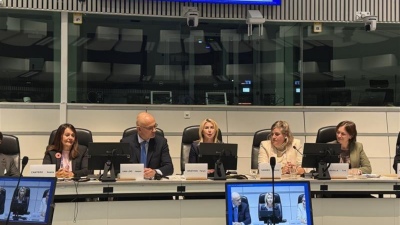
Europe's skills revolution starts in its regions and the new RESET tool can help them
The European Centre for the Development of Vocational Training has just launched a new tool to help regions address their skills challenges. Launched on 8 October at the Committee of the Regions, the new RESET tool is the first multidimensional EU regional index and provides a regional lens on skills and vocational education and training (VET). The tool discloses detailed data about skills demand, skills supply, skills environments and skills mismatches of 244 regions across 27 Member-States.
- By Martina Campajola
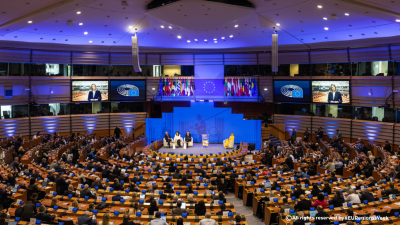
Strong regions, strong Europe: ERRIN at the European Week of Regions and Cities 2026
ERRIN spent the European Week of Regions and Cities moderating sessions, following debates and meeting more than a dozen member delegations. Here is a selection of the moments closest to our priorities, from the EU Missions and the next MFF to talent, culture and competitiveness.
- By Martina Campajola
ERRIN and its members call on the Commission to safeguard the EU Missions and mission-oriented approach in the next MFF
More than 35 regional and local authorities urge EU decision-makers to keep the EU Missions running until at least 2030 and to keep the mission-oriented approach at the heart of Europe's future research and innovation framework. The letter underlines the strategic importance of preserving and strengthening the EU Missions and the mission-oriented approach as central pillars of Europe's competitiveness, resilience and innovation agenda.

- By Anonymous
Digital Pathways Europe (Erasmus+ KA210-YOU)
Esport for Alle (E4A), a non-profit organisation and digital competence hub in southern Østfold, Norway, is looking for partners to join the Digital Pathways Europe proposal under the call Erasmus+ KA210-YOU (Small-scale partnerships in youth). The proposal will develop a shared European model exploring how gaming, media, technology and real-world assignments can provide young people who have fewer opportunities with a supported pathway into learning, employment and participation in society across different national contexts.

- By Joakim P. Berg
Erasmus+ mobility (staff and possibly students), VET (EQF 4, 5): meet and greet 6–10 July?
During the week of 6–10 July, international adviser Lindsay Kupferstein from Akershus County, the largest county in Norway, will be visiting Brussels and the Oslo region European office. She would like to get in touch with other regions with innovative VET systems, with the aim of exchanging experiences and setting up staff (and long-term perhaps student) mobility within Erasmus+.
- By Astrid Hannes
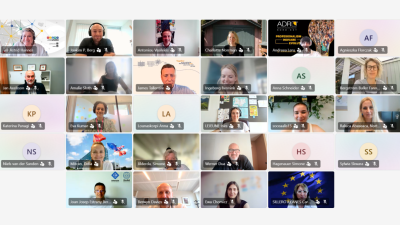
Strengthening the skills base for defence, security and preparedness in Europe's regions: key take-aways of ERRIN's second Skills for Resilience Talk
On 25 June, over 45 ERRIN members gathered for ERRIN's second online Skills for Resilience Talk, which was dedicated to regional skills development and capacity building programmes in the field of defence and security. This offered an excellent occasion to exchange with the European Committee of the Regions Working Group on Defence and learn about the InDefense programme of Linköping University in Östergotland in Sweden, a university-led and ecosystem-delivered short track programme aiming to create an innovation ecosystem for total-defence including students, researchers, business, organisations and authorities, to turn real-world security and preparedness challenges into innovative prototypes and policy solutions.