West Norway Brussels Office is the link between West Norway and Europe. We monitor EU policy development, promote the interests of our region and open doors to European cooperation, networks and funding opportunities.
Our member organisations include the Vestland County Council, Møre and Romsdal County Council, several municipalities, the Western Norway University of Applied Sciences (HVL), Molde University College - Specialized University in Logistics, Volda University College, VID Specialized University and the Norwegian Institute of Marine Research.
We have seven key priorities:
- - Circular economy and green energy
- - Sustainable use of the ocean
- - Healthy societies and welfare
- - Local communities of tomorrow
- - Digitalisation and smart technology
- - Research, innovation and education
- - Preparedness and security
West Norway Brussels Office was established in 2003 and is one of six Norwegian regional offices in Brussels.
Contact detail
-
Head of office
-
Contact person
-
Brussels Office Address
Rue Archimède 17
1000 Brussels
Belgium

Latest Updates
- By Martina Campajola
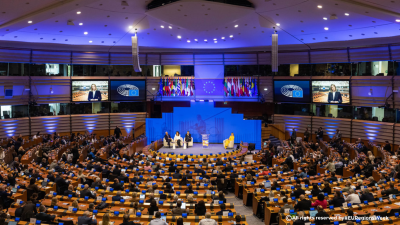
Strong regions, strong Europe: ERRIN at the European Week of Regions and Cities 2026
ERRIN spent the European Week of Regions and Cities moderating sessions, following debates and meeting more than a dozen member delegations. Here is a selection of the moments closest to our priorities, from the EU Missions and the next MFF to talent, culture and competitiveness.
- By Zoé Thomazeau
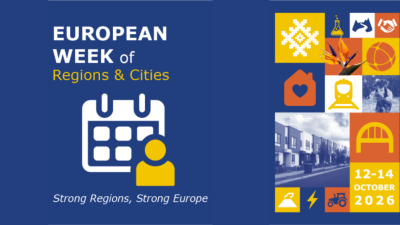
ERRIN members to host events at the European Week of Regions and Cities 2026
The European Week of Regions and Cities, taking place in Brussels from 12–14 October 2026, will once again serve as a leading platform for dialogue on regional and urban policy in Europe. This year the motto is 'Strong regions, strong Europe'. ERRIN is pleased to announce that its members will be strongly represented in this year’s programme, with sessions addressing a wide range of topics relevant to Europe’s regions and cities.

- By Astrid Hannes
Four years on: Celebrating Circular Cities and Regions Pilots’ achievements in driving circular change across Europe
Local and regional authorities across Europe are increasingly committed to the circular economy, yet many still ask the same question: what does implementation look like in practice? A new publication of the Circular Cities and Regions Initiative (CCRI) presents circular systemic solutions which were implemented by twelve Circular Pilot Cities and Regions from 2022-2025. Providing concrete answers and pathways for replication, the pilot solutions span different territorial contexts – from small municipalities to large regions – and cover a wide range of value chains, including construction and the built environment, circular resource management, bioeconomy and nutrient recovery, consumer goods, packaging and food systems.

- By Astrid Hannes
New report: Circular Cities and Regions Pilot Solutions: Insights, impacts, and replication paths
From 2023 until 2025, the Circular Cities and Regions Initiative has supported 12 European cities and regions to test what it really takes to turn circular economy ambition into practical, local and systemic solutions. Their examples in developing Circular Systemic Solutions (CSS) across various sectors and focus priorities form the foundation of this booklet. This compilation brings together the insights and solutions developed through the CCRI Pilot programme between January 2023 and October 2025. It highlights not only what the Pilots achieved, but how they did it: the partnerships they built, the barriers they faced, the tools they used and developed and the lessons that can help others accelerate their own transitions.

- By Astrid Hannes
Get inspired by success stories of the Circular Cities and Regions Initiative
During an online webinar on 11 December, 12 success stories of regions and cities that piloted circular systemic solutions in their territories with support of the Circular Cities and Regions initiatives were presented. We encourage ERRIN members to check the recordings of this webinar, as the lessons learned and experiences shared can inspire other local and regional authorities to launch new local and regional circular initiatives across Europe.

- By Anna Solvang
Collaboration for targeted education and competence development for the green shift
The municipality of Alver in Norway is searching for a region or municipality that works with cooperation between schools, working life and administration to connect young people and education with what the local society demands, preferably aimed at the green transition.