Introduction to the project
Cultural tourism entails opportunities but also risks. If not managed properly, cultural tourism can easily turn into a “value extractive” industry, generating negative environmental, social and cultural impacts on local communities and ecosystems. To this scope, the Be.CULTOUR project has worked for over three years to co-create and test sustainable human-centred innovations for circular cultural tourism through collaborative innovation networks/methodologies and improved investments strategies.
Targeting deprived, remote, peripheral or deindustrialised areas and cultural landscapes as well as over-exploited areas, local Heritage innovation networks have co-develop a long-term heritage-led development project in the areas involved enhancing inclusive economic growth, communities’ wellbeing and resilience, nature regeneration as well as effective cooperation at cross-border, regional and local level.

Project in Action
Be.CULTOUR has identified four transversal innovation approaches linked to the project’s objectives towards circular cultural tourism in the Pilot Heritage Sites:
-
Circular Tourism
-
Human-centred, fair and responsible tourism
-
Cultural europeanisation
-
Smart destination management
A community of innovators (which includes regional authorities and municipalities, clusters and associations, museums and tourist boards, entrepreneurs, chambers of commerce, citizens, researchers, practitioners as well as project partners) in 6 pilot regions has co-created innovative place-based solutions for human-centred and circular cultural tourism, followed by 16 Mirrors and 3 Community Advisors.
ERRIN has built a community of passionate regional representatives committed to shaping the future of cultural tourism in their territory. The Be.CULTOUR community has learnt about innovative approaches to regional development through circular cultural tourism.

ERRIN's role
ERRIN, through its Cultural Heritage and Tourism Working Group, has played a crucial role in mobilising pilot regions, including Cyprus, Spain (Aragon), Italy (Basilicata), Sweden (Vastra Gotaland), Romania (North-East Romania), and Serbia (Vojvodina Region). These regions formed a Community of Practice that addressed specific territorial challenges related to cultural tourism. ERRIN’s responsibilities extend beyond these pilot regions, as it managed a Community of Interest involving 16 additional 'mirror ecosystems.' By providing mentoring and support services, ERRIN empowered local and regional governments, along with their stakeholder ecosystems, to act as catalysts for transformation, ensuring the sustainable development of cultural tourism solutions crafted through the Be.CULTOUR project.


Benefit for members and links with ERRIN's WGs and priorities
Be.CULTOUR aligns closely with ERRIN's priorities by advancing sustainable, human-centered innovations in cultural tourism through collaborative methodologies and strategic investments. The project specifically targeted areas that are deprived, remote, peripheral, deindustrialised, or over-exploited, making it highly relevant for ERRIN members interested in regional development, sustainability, and cultural heritage. By connecting with ERRIN’s Cultural Heritage & Tourism working group, the project offered members opportunities to engage in innovative practices that enhance economic growth, community well-being, and environmental resilience. This alignment ensured that the project contributes meaningfully to the shared objectives of ERRIN and its members.

Project Outputs
The guidebook, developed as one of the final outcomes of the Be.CULTOUR project, offers a comprehensive summary of lessons learned and recommendations from the Action Plan implementations, highlighting the improvement stories in the Pilot Heritage Sites and their territories.
Be.CULTOUR Toolkit
The Be.CULTOUR Toolkit, created as a practical guide for local authorities and tourism operators, provides actionable steps for implementing circular tourism strategies. It includes methodologies, tools, and case studies from the pilot regions, offering a replicable model for other regions.

Latest Updates

- By Dubravka Jurišić
Call for regional examples: Policies and Practices for successful NEB implementation - learnings from local stakeholders
The New European Bauhaus Task Force calls ERRIN members for good local and regional examples contributing to the implementation of the New European Bauhaus (NEB) initiative. The examples will be presented at a meeting taking place in person on 11 June 2025, 10:00–13:00 CEST at the ERRIN Office. Express your interest in presenting a regional example by May 15.
- By Gianpiero Petruzziello
Be.CULTOUR Project wraps up a successful journey on circular cultural tourism
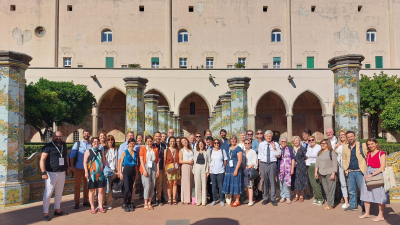
In a dynamic two-day event held on 5 – 6 May in Naples, Be.CULTOUR, project in which ERRIN is a partner, successfully hosted its final event 'Beyond Cultural Tourism: Beautiful, Circular, Human'. The results of the project, the tools developed, and the materials and guides produced to inspire and accompany any other regions interested in boosting their sustainability and entrepreneurship of local cultural tourism are available on the Be.CULTOUR website.
- By Anonymous
EU Research Champions Sustainable Cultural Tourism
As one of the eight Horizon 2020 research projects included in the latest CORDIS Results Pack, ERRIN's Be.CULTOUR project features as a good practice to promote sustainable cultural tourism. The results showcase how working with local communities and cultural heritage leads to better conservation practices and authentic visitor experiences while boosting local economies. CORDIS, the EU's research results platform, disseminates findings from EU-funded research to drive innovation across multiple sectors.
- By Gianpiero Petruzziello
Be.CULTOUR peer-learning visit – Policy recommendations on circular cultural tourism
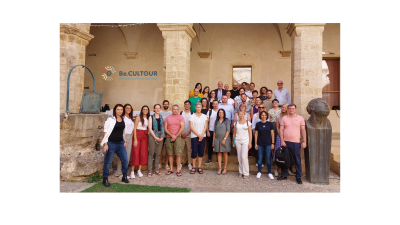
The Be.CULTOUR community gathered in Sciacca, Italy, on 21 -22 September, for the second Be.CULTOUR peer-learning study visit. The event, organised by ERRIN and hosted by The 5 Senses Open-air Museum of Sciacca, one of the 16 Be.CULTOUR mirror ecosystems, provided an excellent opportunity for 50 participants coming from different countries in Europe to share inputs for the Be.CULTOUR policy recommendations on circular tourism and engage in knowledge-sharing and best-practice discussions.
- By Teresa Vio
Call for regional and local examples on Circular Cultural Tourism - Breakfast at Sustainability's
ERRIN is collaborating with ICLEI Europe on the upcoming edition of their event series Breakfast at Sustainability’s taking place on 5 October 2023. During the event, ERRIN is looking to showcase two examples of circular tourism and cultural heritage at regional and local level. This online event is organised as part of the Be.CULTOUR project.
- By Anonymous
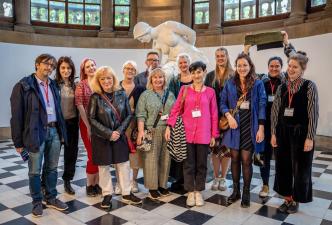
ERRIN members get Saltaire Inspired: Be.CULTOUR study-visit & Local workshop in Saltaire, Bradford
International partners from Be.CULTOUR project community traveled to West Yorkshire from 27 to 30 May to learn more about key events and destinations in the district, including Bradford 2025, exchange successful approaches and build collaborations. The visit was organised in the frame of the peer-learning activities of Be.CULTOUR, where Saltaire Inspired, an arts charity creating contemporary art events in Saltaire Industrial Village, a UNESCO World Heritage Site, is one of the 16 mirror ecosystems. Among the visitors, 3 ERRIN members took part in the event, presenting their innovative approaches toward circular cultural tourism and experience as Capitals of Culture: the City of Leeuwarden, APT Basilicata and the City of Savonlinna.