
Piedmont Region, in north western Italy, with a population of 4.3 million inhabitants (seventh largest region in Italy), has a GDP of €146.3 billion and a GDP per capita of €34,387. It has a long and deeply rooted industrial history, with a high manufacturing savoir faire in traditional and emerging sectors. It represents one of Italy’s most industrialised regions and automotive, aerospace, mechatronics and chemicals are among its main areas of specialisation. It is home of world leading companies, of innovative SMEs and of high level universities and research institutions. Strategically positioned along major trade routes, it is fourth largest exporting region in Italy. As regards exports, Piedmont’s most important specialisation sectors are transport equipment, food products, textiles and wearing apparel. 35,6% of the regional territory is used for agricultural production and the region is known for high-quality production of wine, rice, cereals, fruit, cattle, truffles and hazelnuts. Most of the production of the primary sector is sold on the domestic market, while for processed products, there are numerous export products such as wine, coffee and confectionery products. The rural sector promotes biodiversity and quality certification, prioritising smart, inclusive and sustainable growth, investing in digitalisation, green transition and social development.
Contact detail
-
Contact person
-
Brussels Office Address
Rue du Trône 62
1050 Brussels
Belgium

S3 Strategy
Regional industrial and technological specialisations are represented by 6 “Innovation Systems”, where there are both leading companies and a bulk of : Aerospace , Mobility, Advanced manufacturing, Green technologies, Food, Health. Digital and Green Transition and Social-Territorial Impact are the 3 “Transversal Innovation Components” that, together with the strategic topic “Skills and workforce qualification”, drive the direction of innovation paths for the 6 systems. The S3 has a strong cross cutting character and ecosystem approach, aiming at: supporting economic diversification and cross-fertilisation among sectors; supporting SMEs growth and business aggregations; accelerating time-to-market of research results; strengthening tech transfer, collaboration and networking; attracting investments and investors; coordinate regional policies with Eu and national initiatives. The regional R&D and innovation policy mix includes funding for: R&D collaborative projects at different TRL levels; start-ups growth; offer of R&D and technology infrastructures; a strong and consolidated cluster policy.
Strategic R&I Projects
Latest Tweets
Latest Tweets
Latest Updates
- By Ana Nava
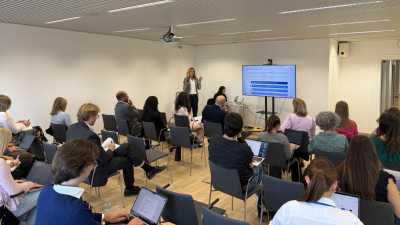
Ocean and Water R&I Strategy: Highlights from ERRIN's Blue Economy WG Meeting
Following ERRIN's joint input to the Water Resilience R&I Call for Evidence, members met with Wiebke Pankauke (DG RTD) for an update as the Commission moves towards adopting the combined Ocean and Water Research and Innovation Strategy (OWRIS). The Strategy aims to build a coordinated EU-level framework for R&I priorities and investment, including a shared long-term vision, and to better understand the landscape of public and private partners, regions included.

- By Ana Nava
ERRIN submits input to the Water Resilience R&I Strategy consultation
ERRIN has submitted a response to the EC's Call for Evidence on the Water Resilience Research and Innovation Strategy. The response focuses on the central role of local and regional authorities in achieving water resilience. This input will be presented at a members' meeting on Thursday 24 September at 14:00 CEST, at ERRIN's Brussels office. The session will include an exchange with a representative of the Mission Ocean and Waters Secretariat.
- By Zoé Thomazeau
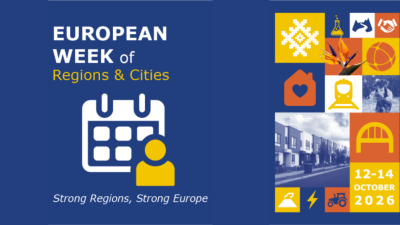
ERRIN members to host events at the European Week of Regions and Cities 2026
The European Week of Regions and Cities, taking place in Brussels from 12–14 October 2026, will once again serve as a leading platform for dialogue on regional and urban policy in Europe. This year the motto is 'Strong regions, strong Europe'. ERRIN is pleased to announce that its members will be strongly represented in this year’s programme, with sessions addressing a wide range of topics relevant to Europe’s regions and cities.

- By Ana Nava
European Ocean Days 2026: Launch of the Coalition of cities, regions, islands and ports for Mission Ocean and Waters
The 2026 European Ocean Days marked the Launch of the Coalition of cities, regions, islands and ports for the Mission Ocean and Waters. Keynote speakers such as Maria Cristina Russo (DG RTD), Markku Markkula (Committee of the Regions) and Christophe Clergeau (MEP) emphasised the including the Mission Ocean and Waters in the upcoming MFF. Local authorities are now encouraged to join this Coalition to access networking and capacity-building services, among others.

- By Anett Ruszanov
UnILiON Brokerage event on Horizon Europe Cluster 6
UnLION is organising a brokerage event under food, bioeconomy, natural resources, agriculture and environment cluster calls. It will take place on 22 May between 10:00 and 12:30. This event is organised by Brussels liaison offices from the UnILiON network. UnILiON is an informal network of around 54 Brussels-based liaison offices that represent over 160 universities across Europe, as well as in UK, Japan and Norway.