
Ocean and Water R&I Strategy: Highlights from ERRIN's Blue Economy WG Meeting
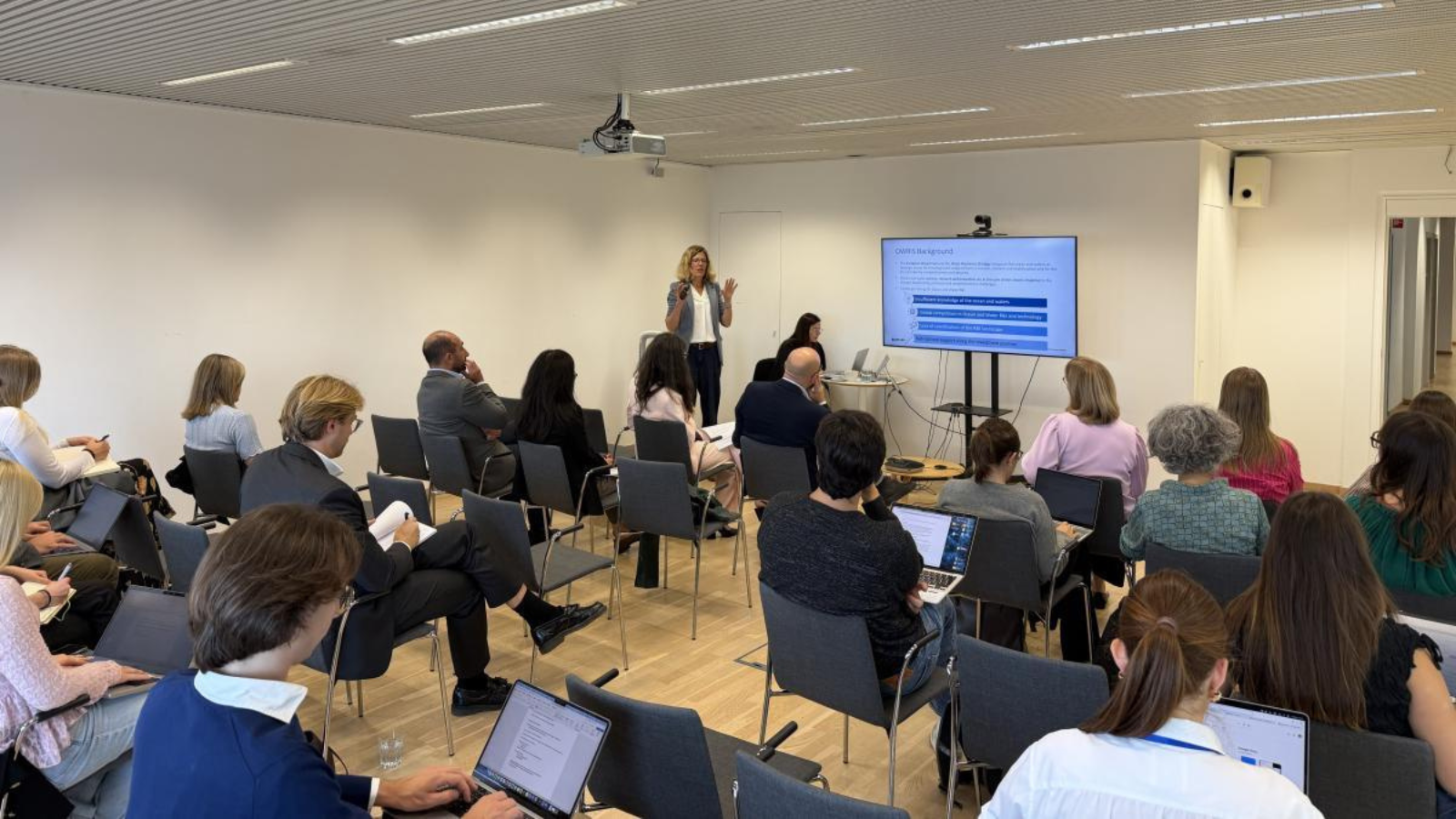
Following ERRIN's joint input to the Water Resilience R&I Call for Evidence, members met with Wiebke Pankauke (Directorate-General for Research and Innovation - DG RTD) for an update as the Commission moves towards adopting the combined Ocean and Water Research and Innovation Strategy (OWRIS).
Both the Ocean Pact and the Water Resilience Strategy have announced a dedicated R&I Strategy, and the source-to-sea logic connecting the two has gained relevance since. R&I is central to the EU's response, but major knowledge gaps remain. The landscape is also crowded and competitive, making coordination essential. A recurring theme was building a bridge between research results and commercialisation: the innovation-to-investment journey.
The Strategy aims to build a coordinated EU-level framework for R&I priorities and investment, including a shared long-term vision, and to better understand the landscape of public and private partners, including regions. The Ocean Act, the OWRIS and the revised Maritime Spatial Planning (MSP) Directive are expected to come out around the end of the year.
Core messages from DG RTD
The Strategy is expected to focus on better sea-basin coordination and deployment of existing knowledge and capacities. It will also seek to address the persistent innovation gap, recognising that Europe’s challenge lies less in scientific excellence than in the deployment of solutions. Priorities therefore include reducing investment risk, supporting scale-up pathways and developing viable models that can bring innovations to market.
Another key objective is to put ocean observation into operations through OceanEye, to bridge the existing knowledge gap. The strategy is also expected to promote water literacy by strengthening skills, public participation and knowledge-sharing.
On the Mission Ocean and Waters, DG RTD stressed anchoring its learnings in the Strategy and thinking beyond the 2030 horizon, identifying which elements of the Mission approach can feed future priorities.
Regional perspectives
Piedmont highlighted the need for better data through satellite observation, remote imaging and digital twins (among others), to detect water-related pressure points (e.g. PFAS) early enough to act. This requires dedicated R&I funding combined with community involvement.
Turku/Southwest Finland presented several solutions to tackle water issues, such as the application of gypsum in agricultural land or the implementation of nature-based water management solutions co-funded by the RESIST project. The region called for the Strategy to accelerate deployment, finance the full innovation pathway and recognise and connect coastal areas as testing infrastructures and demonstration sites.
Emilia-Romagna presented the Alliance of European Regions on Water Resilience, formed in 2026, and highlighted that the Strategy should present a strong place-based component. The Alliance plans a session at the European Week of Regions and Cities (more information here), with a paper on financing as an expected outcome.
Key points from the discussion
The discussion focused on how to improve the deployment and scaling of research and innovation. On a question about the potential extension of the Digital Twin of the Ocean (DTO) to rivers, it was noted that the Water Resilience Strategy is indeed expected to broaden its scope, although OceanEye remains the current priority. Faster scaling of SMEs and start-ups was seen as requiring stronger links across existing projects, with lessons learned feeding into policy initiatives such as the EU Startup and Scaleup Strategy, including the Scaleup Europe Fund to support investability or the European Startup and Scaleup Scoreboard to make it easier to identify close-to-market solutions.
Coordination emerged as a key priority capable of connecting stakeholders, funding instruments and investors, including through the National and Regional Partnership Plans (NRPPs). It was also noted that addressing regulatory barriers and improving market access may be as important as increasing funding. At the same time, participants pointed to persistent financing mismatches, for example, between the long depreciation periods of wastewater infrastructure and the shorter duration of available loans.
European Partnerships were discussed, and it emerged that they will become fewer and focused on areas where there is clear added value and where the tripartite model between EU, Member States and the private sector brings tangible benefits. Related discussions also touched on the concept of the 'Moonshots', centred on large-scale, technology-enabled initiatives and distinct from the broader societal focus of the Missions. In this regard, the importance of basin-level and cross-basin coordination in the context of the Mission Ocean and Waters was noted. Lighthouse Coordination and Support Actions (CSAs) and the CO-WATERS project were presented as valuable mechanisms in this regard. However, no concrete timeline or implementation mechanism was shared for sustaining this type of approach.
DG RTD closed the event, reiterating that Europe's challenge is not a lack of research capacity but the need for clearer pathways to investment, reinforcing the need for stronger links between the 10th EU Framework Programme 10 (FP10), the European Competitiveness Fund (ECF) and the NRPPs and for a more effective pipeline from project results to scale-up and market deployment.
For more information, the event’s agenda and presentation can be found here.
These exchanges reflect well some of ERRIN's current work. Through CO-WATERS and BlueActionBANOS, ERRIN is actively engaged in delivering the Mission Ocean and Waters at basin and cross-basin level. ERRIN is also supporting regions directly on the ground through the Experimentation Journey on Water Resilience, part of the Preparatory Action "Innovation for Place-Based Transformation", and continues to support exchanges on water-related matters and initiatives, such as through its recent Online Blue Skills Talk.