Wielkopolska Region Brussels Office is a part of the regional administration and represents the region in Brussels. Its main aim is to follow the EU policies and legislation, as well the EU funding programmes and liaise with the relevant partners in the region, including local and regional authorities, universities and research centres, enterprises and civil society organisations. It also represents the interests of the region before the EU institutions and coordinates the work of the Polish delegation in the European Committee of the Regions. The office works closely with other regional representations based in Brussels and is a member of selected regional networks.
Wielkopolska Region is one of the largest regions in Poland and with an area of 30 000 sq. km and a population of 3.4 mln inhabitants. It is a dynamically developing region with a favourable geographical location on the main transport axis between the East and the West. Its strongest industrial sectors include agrifood, machine and electrical engineering, furniture and chemical industry. Wielkopolska strives to support the regional innovation ecosystem by enhancing its research potential and supporting entrepreneurship with a special focus given to the areas of smart specialisations and environmentally sustainable solutions.
Contact detail
-
Head of office
-
Contact person
-
Brussels Office Address
rue Montoyer 21
1000 Brussels
Belgium
S3 Strategy
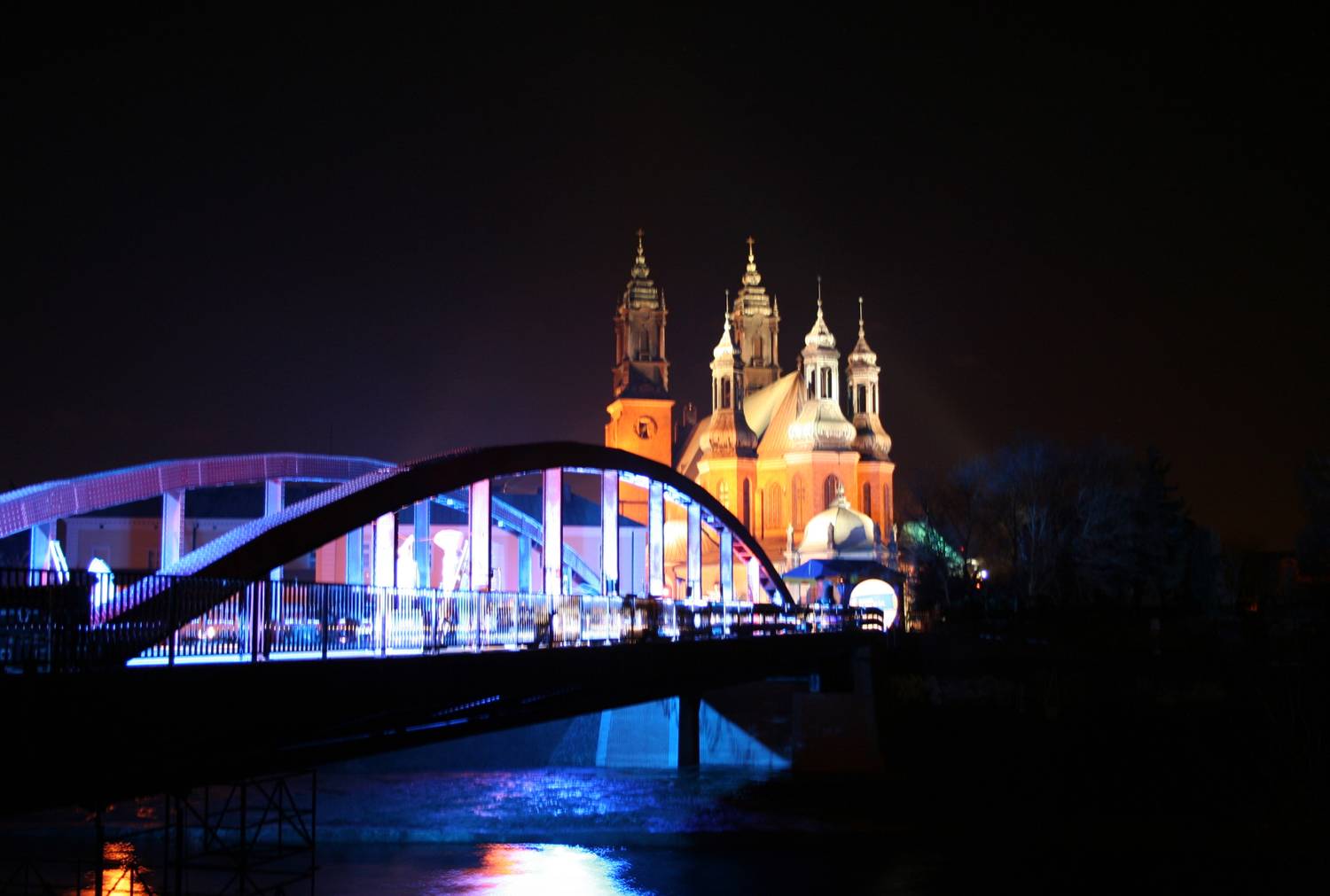
The current Regional Innovation Strategy was adopted in December 2020 and it presents the region's innovation policy for the period up to 2030. It strives to develop innovation policy based on a systemic approach to boost entrepreneurship, open innovations and internationalisation and respecting sustainable development of the region.
It consists of the following strategic goals:
- Improving innovative activity in Wielkopolska
- Development of the regional innovation ecosystem
- Involving Wielkopolska in the global value chains
- Human resources for a modern economy
As well as 2 horizontal goals:
- Development of areas of the regional and subregional smart specialisations and key enabling technologies
- Sustainable development of the region (zero-emissions, electromobility, green energy, energy transformation, decarbonisation, circular economy)
Wielkopolska's 6 areas of regional smart specialisations are:
- Bio-based raw materials and food for informed consumers
- Interiors of the future;
- Industry of tomorrow;
- Specialised logistics processes;
- ICT-based development;
- Modern medical technologies.
In addition to the regional areas, the following areas are included in the subregional specialisations: energy-efficient construction; renewable energy sources and modern energy technologies, incl. hydrogen; tourism; aviation and space technologies; textile industry.
Strategic R&I Projects
RELOS3
The project focuses on implementing regional Smart Specialisation Strategies (RIS3) in a local context by actively involving local authorities, innovation actors and companies. RELOS3 (From Regional to Local: Successful deployment of the Smart Specialization Strategies) is a unique opportunity to develop local RIS3 strategies.
WEBSITE>
COMPETE IN
‘Compete In’ looks to improve the effectiveness of regions and cities as facilitators of internationalisation processes. The expected outcomes are improvements of internationalisation policies through local action plans and cooperation processes.
WEBSITE>
BSW-H2
BSW-H2 (Building a support system for high-quality R&D&I projects by developing low and zero-emission technologies, with particular emphasis on hydrogen) project aims to create a framework to implement the entrepreneurial discovery process regarding hydrogen economy solutions. It involves activities in the implementation and support for R&D projects developing low and zero-emission technologies.
Gospodarna 2050 - H2Wielkopolska
The project aims to shape and promote the H2Wielkopolska brand in the area of the hydrogen economy and strengthen the international competitiveness of Wielkopolska's SMEs and industry in the field.


Latest Tweets
Latest Tweets
Latest Updates
- By Intern SMR
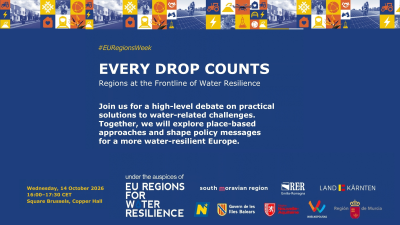
EU Regions Week Session Every Drop Counts: Regions at the Frontline of Water Resilience
Join EU Regions Week Session called Every Drop Counts: Regions at the Frontline of Water Resilience. The session will explore how regions can lead Europe’s response to growing water-related risks and strengthen climate adaptation through place-based solutions. High-level representatives from eight European regions will share practical approaches to water retention, quality and quantity, agriculture, tourism and preparedness.

- By Adrianna Frankowska
ESA InCube initiative: Polish company is seeking partners for the Land Tax Assessor project
ITTI is a Polish software company experienced in projects for European Space Agency and the European Commission (Horizon Europe). It is currently developing Land Tax Assessor, an AI-based online service for local governments that combines local geospatial data with satellite imagery to verify built-up areas and detect property tax discrepancies. They are looking for local authorities (municipalities, towns, cities) to test the service and share feedback on local processes. The tool is free of charge and does not required financial commitment from local authorities.
- By Zoé Thomazeau
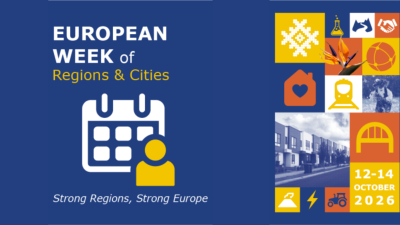
ERRIN members to host events at the European Week of Regions and Cities 2026
The European Week of Regions and Cities, taking place in Brussels from 12–14 October 2026, will once again serve as a leading platform for dialogue on regional and urban policy in Europe. This year the motto is 'Strong regions, strong Europe'. ERRIN is pleased to announce that its members will be strongly represented in this year’s programme, with sessions addressing a wide range of topics relevant to Europe’s regions and cities.

- By Ewa Chomicz
Kicking off the work of ERRIN’s Management Board in 2026
On 29 January, the ERRIN Management Board launched its activities in 2026, welcoming two new members, electing new Co-Chairs and a Treasurer, and approving the ERRIN Cluster Annual Work Plans for this year.

- By Maria Bostrom
ERRIN in conversation with Commissioner Zaharieva on strengthening regional R&I ecosystems
Following our extensive and ongoing advocacy for a place-based dimension and ecosystem approach in the next Multiannual Financial Framework (MFF) and 10th Framework Programme (FP10), ERRIN was pleased to meet with Commissioner Ekaterina Zaharieva, responsible for Research, Innovation and Startups. With the Commission's proposal for the next budget period just around the corner, ERRIN welcomed the opportunity to share insights, gathered from our 120+ regional ecosystems, on how the EU can create the right conditions for R&I to thrive for a competitive Europe post-2027.

- By Maria Bostrom
ERRIN's Spring Annual General Meeting 2025 focusing on the territorial dimension of the EU’s research and innovation funding landscape post-2027
On June 17, ERRIN members and regional stakeholders from across Europe gathered in Brussels for the network's Spring Annual General Meeting (AGM) – an opportunity to take stock of recent achievements, reaffirm shared priorities and engage in timely discussions on the territorial dimension of the EU’s research and innovation funding landscape post-2027. This year's AGM was generously hosted by Wielkopolska Region, Emilia-Romagna Region, the Representation of the State of Hessen to the EU and Nouvelle-Aquitaine Region and strategically held in connection to the Smart Specialisation Community of Practice (S3 CoP) 2025 Conference, organised the following day in Brussels.