
Europe's competitiveness is built bottom-up
What is the role of regional innovation and Smart Specialisation Strategies in the emerging EU policy and budgetary architecture?
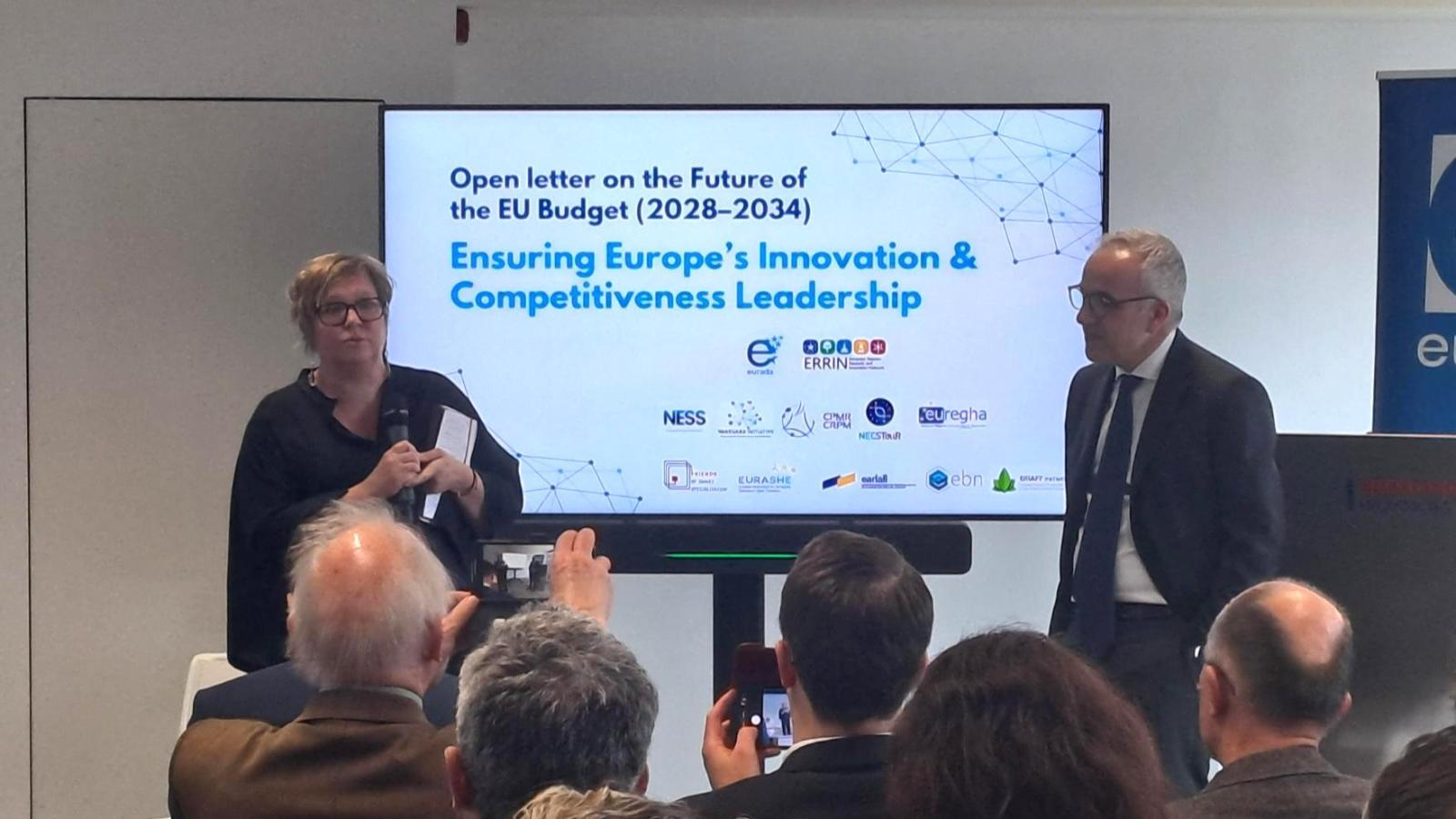
Over 70 representatives of European regions and associations gathered on 14 April to follow a high-level policy roundtable "Regions at the Core of Europe’s Future Competitiveness and Innovation Leadership" on the critical topic of the EU long-term budget (MFF) 2028-2034 and Regional Innovation Strategies, organised jointly by ERRIN and EURADA.
Led together by Pirita Lindholm, ERRIN Director, and Francesco Molica, EURADA Director, the discussion hosted by the Cities Northern Netherlands EU Office in Brussels brought together policymakers, regional actors, and experts to reflect on the role of S3 in the post-2027 EU policy and funding framework.
A big thank you to all the speakers and participants for a rich and forward-looking exchange – including MEP Siegfried Muresan, MEP Marcos Ros Sempere, Mikel Landabaso from the JRC of the European Commission, Thomas Wobben from the European Committee of the Regions, Ilari Havukainen from Finnish Permanent Representation, Michael Johnsson from Skane European Office, Federica Garbuglia from ART-ER – and Raluca Abaseaca from North-East Romania Regional Development Agency as moderator.
Key takeaways:
- Europe’s innovation capacity is territorially embedded, requiring tailored approaches that address regional specificities rather than one-size-fits-all solutions - regions know their ecosystems best
- S3 provides a strategic frame for regional innovation and should play a crucial role in embedding a territorial approach to innovation and competitiveness across the next EU long-term budget - Europe's competitiveness needs to be built bottom-up
- S3 should be systematically integrated in all relevant regulations, both funding programmes as well as sectoral strategies - S3 can ensure that regional assets are mobilised across EU
- The impact and achievements of S3 need to be demonstrated, but the S3 approach should also be re-thought and updated so that it remains relevant for today's challenges
The discussion built on the momentum of the Open Letter on the Future of the EU Budget signed last month by 12 European networks, reinforcing the importance of place-based innovation and the role of regions in shaping Europe’s long-term competitiveness. We look forward to continuing this dialogue and contributing to the debate on the future EU policy and funding framework.
- Ewa Chomicz
- 16/04/2026
-
Working Group