3 main topics
1. Participatory governance of cultural heritage
Participatory governance of cultural heritage is about participatory and people-centred approaches that involve the public sector, private stakeholders and civil society to:
co-design cultural heritage policies and programmes; share management and safeguarding of cultural heritage; increase the valorisation of cultural heritage in communities;
use cultural heritage as a resource for the community and territorial development.
2. Adaptive reuse of built heritage
Adaptive re-use of heritage buildings is the act of giving new use to an obsolete, underused or misused building. In adaptive reuse approach, rather than continuing the building’s existing use through upgrades or restoring it to a specific time period, the new use is defined and adapted to the building while preserving and respecting its value and significance.
3. Quality of interventions on cultural heritage
Interventions on cultural heritage are actions that impact or can impact places or sites of heritage interest and put heritage in danger. Quality interventions are the outcome of multiple factors including aesthetics, habitability, environmental friendliness, accessibility, integration into the surrounding environment and affordability.
Successful local actions will be documented so that policymakers can strengthen their cultural heritage offers.
Activities will build on the work done by the European Commission in relation to cultural heritage.

CHA Team Member
Meet the CHA Team Member for ERRIN

Ilaria d'Auria
Project & Outreach Manager
Latest Updates
- By Anonymous
Cultural Heritage in Action concludes with valuable outcomes for cities and regions
The Creative Europe peer-learning scheme for cities and regions on cultural heritage, implemented by Eurocities, KEA, ERRIN, Europa Nostra, and the Architects Council of Europe presents now a digital toolbox, a catalogue of good practices and a thematic analysis as its outcomes.
- By Lucy Hammond
Cultural Heritage in Action: call for good practices
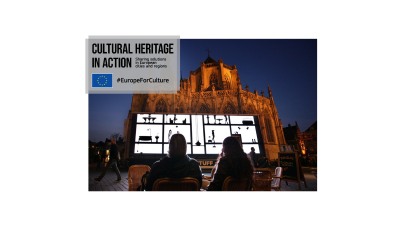
The Cultural Heritage in Action project call for good practices is currently open for submissions until 15 October 2022. Representatives of regions, cities and rural areas in the EU and the UK are invited to participate in the call to highlight their public administrations’ work in cultural heritage.

- By Teresa Vio
DG GROW Inventory of transferable digital tools and practices for the tourism sector
DG GROW has launched the project “INVENTORY OF TRANSFERABLE DIGITAL APPLICATIONS AND SOLUTIONS FOR THE TOURISM ECOSYSTEM” (Contract Number EASME-2019-OP-0021-015-GROW-IN) that aims to collect information about digital tools and practices used in EU countries that support the tourism sector. The inventory is built on data collected via a public survey open until 30 September.
- By Anonymous
Cultural Heritage in Action: call for good practices
Cultural Heritage in Action wants to share your best practices throughout Europe and beyond. If you are part of the administration of a city, region or a rural area in the EU, this is your chance to highlight your work in cultural heritage. All you need to do is fill out a short form with a description of a practice in your area. About 30 practices will then be selected for publication and promotion through the EU-funded Cultural Heritage in Action programme.
- By Anonymous
Call for Participants - Cultural Heritage in Action Peer Learning Visit in Zaragoza
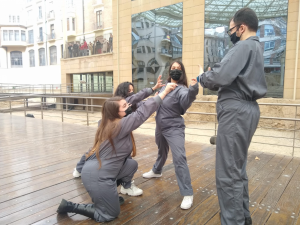
Cultural Heritage in Action, project in which ERRIN is partner, is organising a peer learning visit to Zaragoza from 26 to 28 October. The call for participants is open until 2 September for a visit to take place from 26-28 October 2022. Selected applicants (24 per visit) will be informed by the end of September. The Cultural Heritage in Action project is covering for participants’ travel and stay in Zaragoza.
- By Teresa Vio
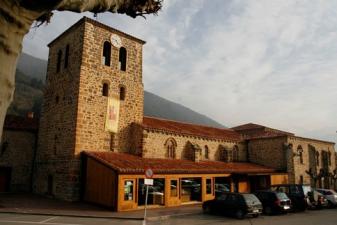
Cultural Heritage in Action: Call for Participants in peer learning visit in Cantabria
Cultural Heritage in Action is organising a peer learning visit to Cantabria from 21 to 23 September. Anyone working on culture and cultural heritage for a regional, city or rural administration from the EU and the UK can apply to take part in the visit by 15 June.