
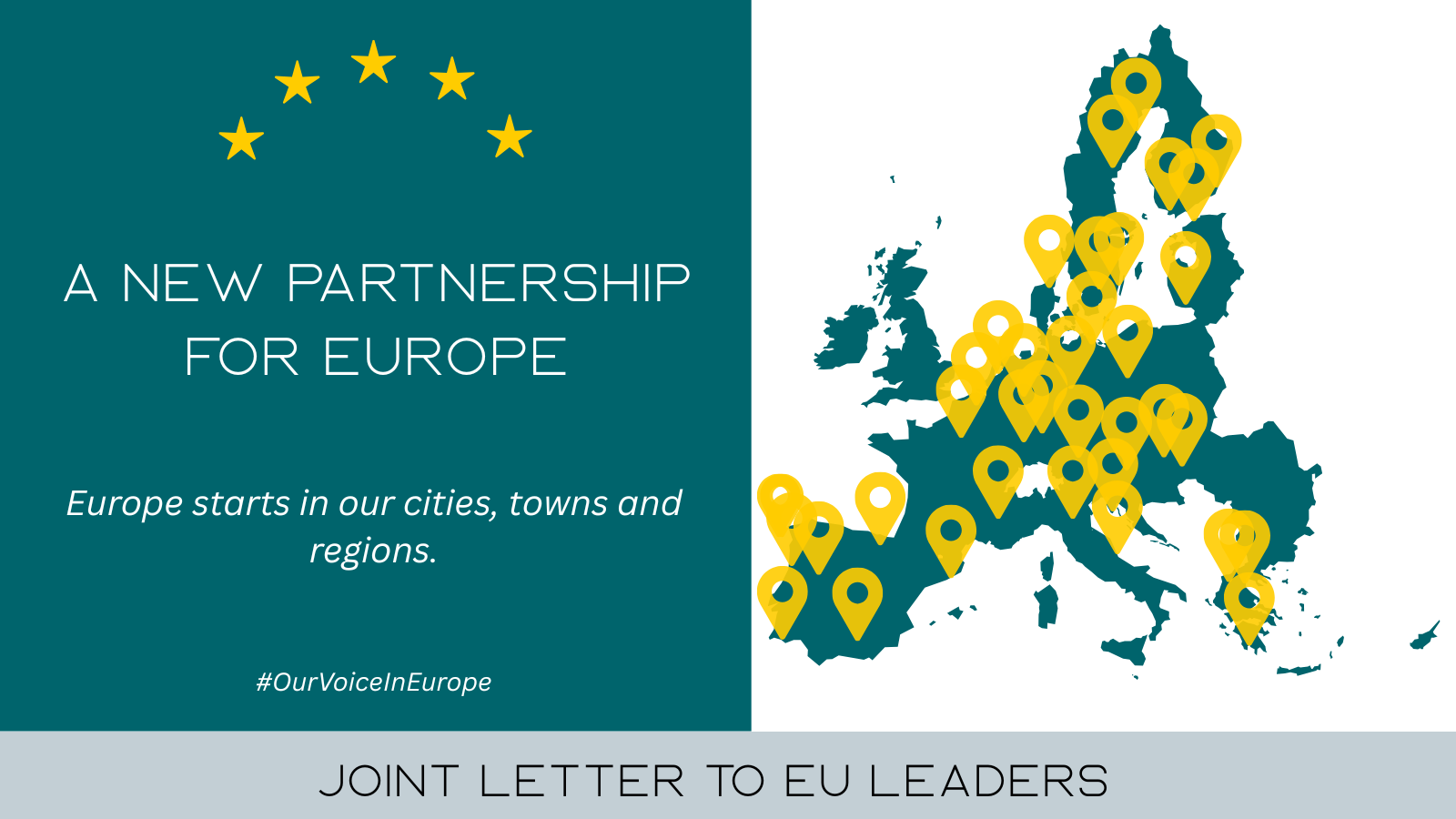
ERRIN joins European Cities and Regions call for stronger role in EU Governance
ERRIN alongside several ERRIN Members have joined more than 80 cities, towns, regions and 11 networks across Europe to call for a new era of EU policy making – one that acknowledges local and regional authorities as equal partners in shaping Europe’s future.
Initiated by the cities of Malmö (Sweden) and Freiburg (Germany), in their respective roles as ICLEI’s Global and European Presidents, this joint letter emphasises that local and regional governments, who are responsible for implementing nearly 70% of European Green Deal legislation and 60% of climate-related public spending, are pivotal in driving tangible changes and should not be sidelined in European policy processes. Leaders from cities and regions across the EU, including from Helsinki Region, Wielkopolska Region, Skåne Region, Iași County Council, Occitanie/ Pyrénées–Méditerranée Region and Oslo Region, are calling for a move beyond consultation to genuine collaboration at the EU level, seizing the next seven-year budget preparations as a critical opportunity to invest in regional development, social cohesion and innovation.
The letter urges the European Commission, Council and Parliament to recognise local and regional governments as key partners by establishing structured, permanent dialogues from the outset that include agenda-setting, policy co-design, financing and implementation. It also calls on EU institutions to integrate local and regional feedback throughout the legislative process to ensure more effective and well-grounded outcomes. As drivers of Europe’s transformation in areas such as sustainable housing, clean energy, digital innovation, infrastructure and public health, local and regional governments stress that EU funding reaches community needs. Therefore, the letter highlights that multilevel governance must become a guiding principle for the next EU long-term budget to ensure that funding priorities reflect local and regional needs and that implementation is effective on the ground. A stronger role for local and regional governments in decision-making is also essential for turning European ambitions into lasting change in communities.
Find the full letter attached.
Policy Recommendations:
- Multilevel governance must be at the heart of the next EU Budget: The next EU budget (2028–2034) is a historic opportunity to embed multilevel governance as a guiding principle, so that funding reaches to the level where it makes the difference, reflects real community needs and is delivered efficiently by all levels of governments. In this context, the Cohesion Policy must remain as the cornerstone of the EU budget and its partnership principle should be strengthened to enable more bottom-up strategies. Local and regional governments should also have a seat in the definition of reforms, as well as for the investments that would impact their territories.
- Structured and permanent dialogue mechanisms under the Cities Agenda and upcoming legislation: The European Commission, the Council, and the Parliament should establish structured, permanent dialogues with local and regional governments from the start – in agenda setting, policy co-design, financing and implementation. The EU’s new agenda for cities consultation highlights that this initiative aims to “strengthen the EU’s ambition for cities and sustainable urban development by making certain their interests and needs are reflected in future EU level initiatives, and that proper governance is in place to implement this”. Therefore, this agenda can acknowledge local and regional governments as key partners, and establish structured, permanent dialogues with local and regional governments.
- Transform 'implementation dialogues' into genuine multilevel partnerships: The Commission should turn its 'implementation dialogues' into genuine multilevel partnership that engage all levels of government, and to embed feedback from local and regional level throughout the legislative process to ensure more effective, grounded measures and avoid costly unintended consequences. In the current way that the Commission is organising implementation dialogues, local governments are usually sidelined or invited on a short notice. This could also be seriously improved.
Learn more about ERRIN's policy work and here and find our policy documents here.
- Maria Bostrom
- 16/06/2025