Reflecting on the 2024 Living-in.EU Digital Assembly
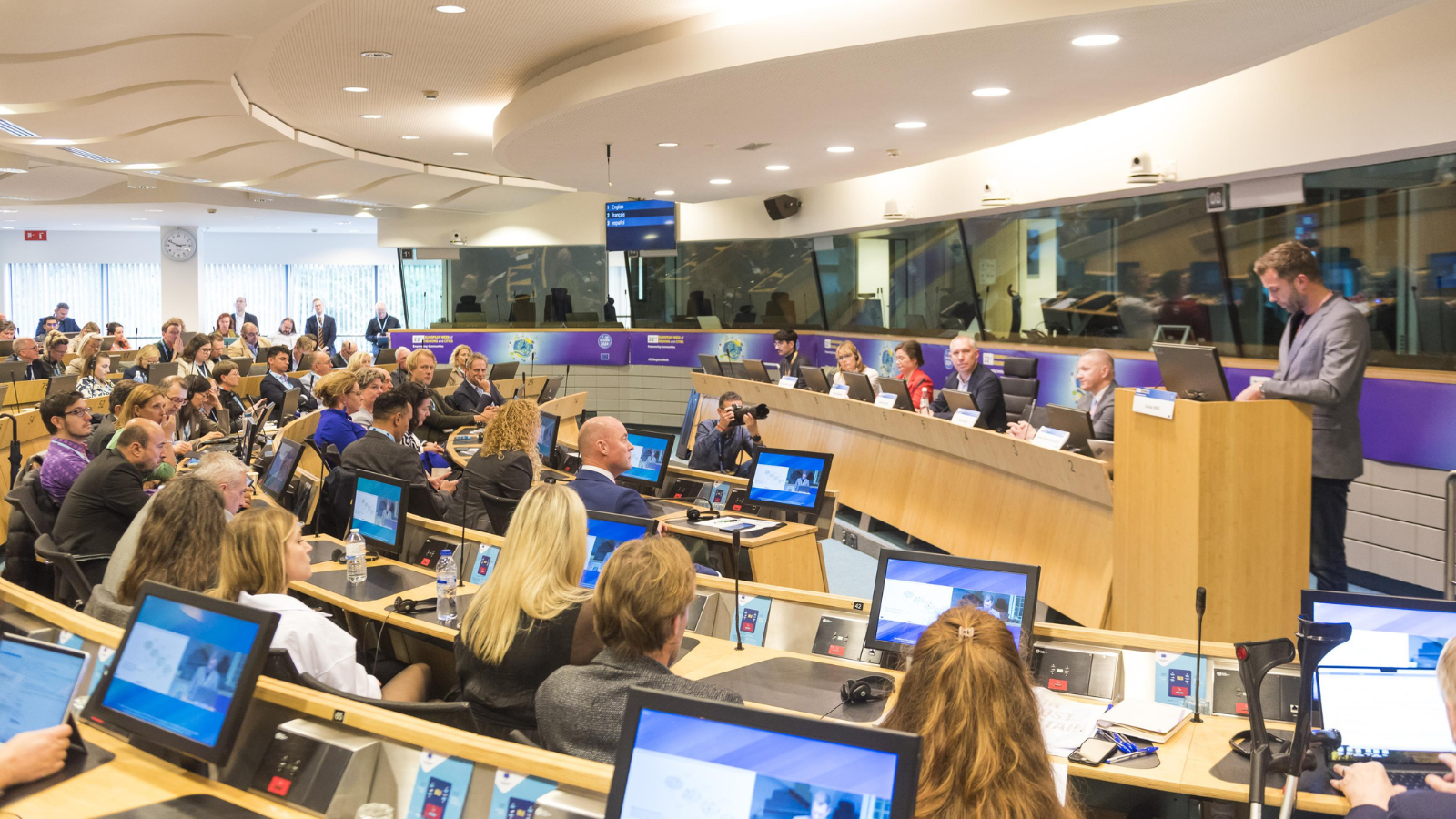
The 2024 Living-in.EU Digital Assembly and the networking reception 'Connecting people for the Twin transition' were organised on Wednesday 9 October 2024, during the 22nd European Week of Regions and Cities, leveraging the presence of many local and regional representatives in Brussels to emphasise the place-based approach in the digital sector.
ERRIN joined the Living-in.EU initiative in 2022 with the Go Li.EU project, aiming to represent regional authorities and support cities in their digital transformation. With the involvement of many members as signatories of the initiative, ERRIN plays an important role in assessing the impact of the movement and in supporting the creation of tools to measure the digital maturity of cities and regions in Europe, such as through the Monitoring and Measuring Working Group and the LORDIMAS tool.
This year, ERRIN coordinated and organised the movement's annual event, with the support of all Living-in.EU partners (Eurocities, OASC, ENoLL and CEMR), the two event chairs - Mirja Vehkaperä, Chair of the Board at the City of Oulu, and Lluïsa Moret i Sabidó, Mayor of Sant Boi de Llobregat - and more importantly, with the inputs and support of ERRIN's ICT Working Group members.
ERRIN's involvement was strengthened by the contributions of several of our members, who not only represented their communities but also actively shaped the event's content and discussions.
-
In the panel discussion, both our members Riga and Bourgogne-Franche-Comté Region highlighted their role in supporting digital transformation, from a city and a regional perspectives. They both highlighted the importance of the ecosystem approach, priority of our network, and how local and regional authorities can mobilise local ecosystems to accelerate digital transformation.
-
Markku Markkula, Vice-President of the Committee of the Regions and President of Helsinki-Uusimaa Region, highlighted his work on climate adaptation and the future of EU climate objectives, and emphasised the role of the digital sector in supporting the twin transition in EU regions.
-
Our member Cities Northern Netherlands mobilised their local authorities to join the event, with the keynote of Guido Rink, Vice-Mayor of the City of Emmen, but also to sign the 'Join, Boost, Sustain' Declaration for the City of Assen, the Province of Drenthe, the City of Groningen, the City of Leeuwarden and the City of Súdwest-Fryslân.
-
Stakeholders from our members' ecosystem also joined the movement, with the City of Cervello representing Catalonia, the Local Councils' Association for our member Malta and the Council of Oulu Region for North and East Finland.
-
The presence of many of our members to both the Assembly and the networking reception ensured the reach and success of the event.
-
ERRIN projects, such as RESIST or NetZeroCities, were present in a dedicated marketplace to showcase existing scalable solutions supporting the green transition with digital tools.
This collaborative effort highlights the importance of our members' expertise in shaping our digital work. These events provided an opportunity to convey ERRIN's key policy messages as the new European Commission takes shape and the future budget is debated, with three main points:
-
Continuous support for multi-level governance: sustained support is necessary for initiatives like the Living-in.EU movement, which gathers local, regional, and national governments to collaborate on digital transformation with their local stakeholders.
-
Addressing fragmentation in local digital innovation ecosystems: strengthening the role of regions is essential, as they can mobilise their entire ecosystem to ensure a just and comprehensive digital transformation in their territory. The digital divide should be addressed from both a European perspective and a place-based approach. Regional authorities need support in their mission to assist smaller municipalities, SMEs and stakeholders who are at risk of being left behind in the digital transition.
-
Strengthening the framework for collaboration between European digital innovation ecosystems: well-connected regional innovation ecosystems are key, and the digital sector can serve as a laboratory for fostering strong, place-based ecosystems and enhancing their connectivity at the EU level. Instruments like Digital Innovation Hubs and Regional Innovation Valleys are vital, but a stronger framework is needed to support these efforts. Cohesion policy, industrial policy, and R&I policy should work in tandem, leveraging various funding instruments to enhance collaboration and address governance issues.
The 2024 Living-in.EU Digital Assembly highlighted the importance of regional cooperation in advancing digital transformation. ERRIN aims to build on this momentum to further promote the expertise of its members in the digital sector and invite all interested members to connect with the ICT Working Group and the Secretariat to continue this work.
- Rodolphe Doité
- 15/10/2024
-
Members
-
Working Group